
- 1
- 1
Gombe National park

Where Chimpanzees, Forests & Lake Tanganyika Meet
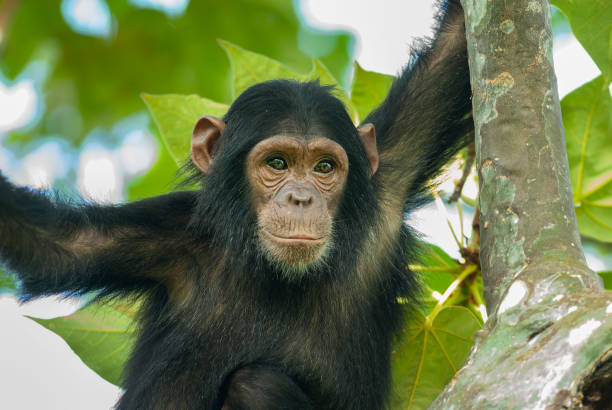
Tucked along the eastern shores of Lake Tanganyika in western Tanzania, Gombe National Park is one of the country’s most distinctive and intimate wilderness destinations. Unlike Tanzania’s famous savannah parks, Gombe is a forested world of steep valleys, lush vegetation, mountain slopes and freshwater shores, best known for its remarkable population of wild chimpanzees.
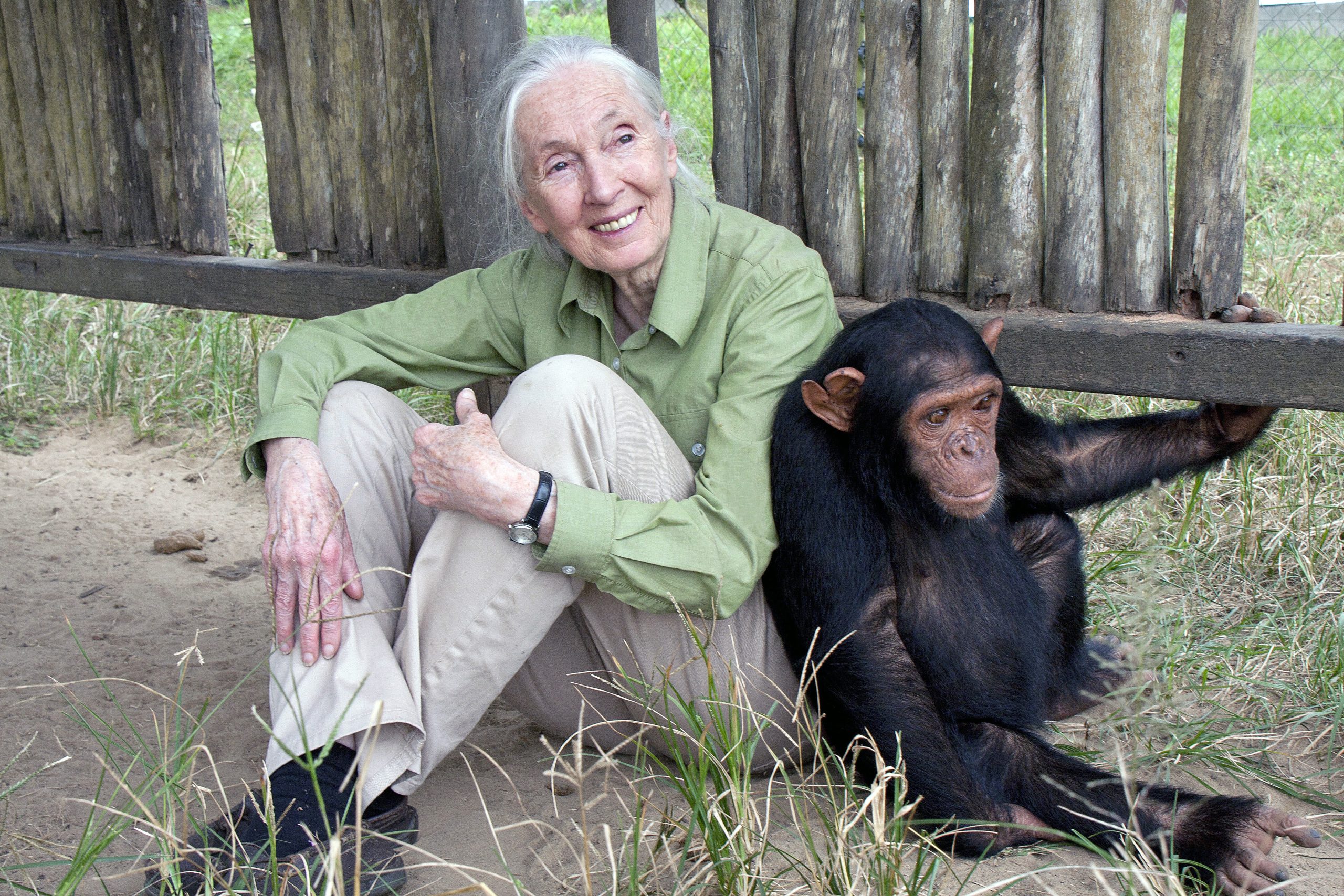
Covering approximately 52 square kilometres, Gombe is one of Tanzania’s smallest national parks, yet its importance extends far beyond its size. The park became internationally recognized through the pioneering chimpanzee research of Dr. Jane Goodall, who arrived in Gombe in 1960 and began what became one of the world’s most significant long-term studies of wild chimpanzees.
Today, Gombe offers travelers a rare opportunity to enter a living primate research landscape and experience chimpanzees within their natural forest environment. Combined with hiking, birdwatching, waterfalls and the beautiful waters of Lake Tanganyika, Gombe provides a completely different perspective on Tanzania’s natural heritage.
WHERE IS GOMBE NATIONAL PARK?
Gombe National Park is located in Kigoma Region in western Tanzania, along the eastern shore of Lake Tanganyika.
Its remote position gives Gombe a distinctly secluded character. The park is reached through Kigoma, followed by a boat journey across Lake Tanganyika, making the journey itself part of the destination experience. The combination of lake travel, forested hills and isolated beaches creates an arrival unlike the traditional road-based safari experience.
Gombe’s location within the Albertine Rift landscape also contributes to its remarkable biodiversity, with forests, steep valleys and lake ecosystems occurring within a relatively small area.
THE STORY OF GOMBE
Gombe’s identity is inseparable from the history of chimpanzee research.
In 1960, Dr. Jane Goodall arrived in Gombe and began observing the behavior of wild chimpanzees. Her work transformed scientific understanding of chimpanzees and contributed significantly to modern primatology and conservation. Research at Gombe has continued for decades, creating one of the world’s longest-running studies of wild chimpanzees.
The significance of Gombe therefore goes beyond tourism. It is a place where generations of chimpanzees have been observed, documented and studied, creating an extraordinary scientific record of their social behavior, relationships and ecology.
Gombe was officially upgraded from a game reserve to national park status in 1968, helping secure the forest habitat that supports its famous chimpanzee communities.
CHIMPANZEES — THE HEART OF GOMBE
The greatest attraction of Gombe National Park is its wild chimpanzee population.
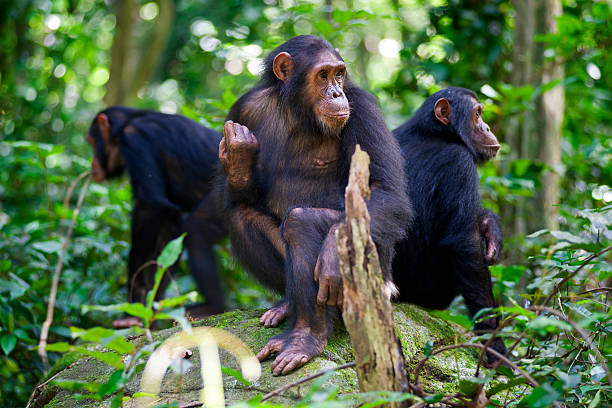
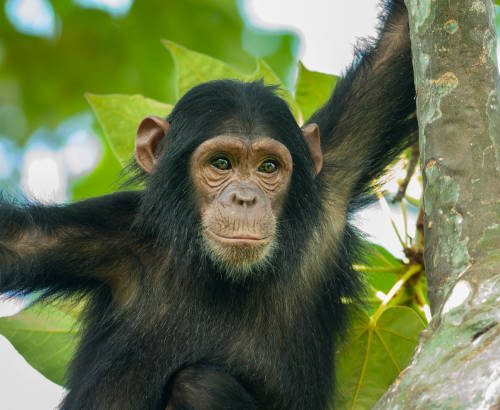
Gombe’s chimpanzees belong to the eastern chimpanzee subspecies and live within the park’s forest habitat. Because some chimpanzee communities have been observed and studied for generations, Gombe provides an exceptionally important setting for understanding these fascinating great apes.
Chimpanzee trekking involves walking through the forest with trained park guides and trackers in search of chimpanzee communities. The experience is not simply about seeing an animal; it is about entering their natural environment and observing their behavior within the forest.
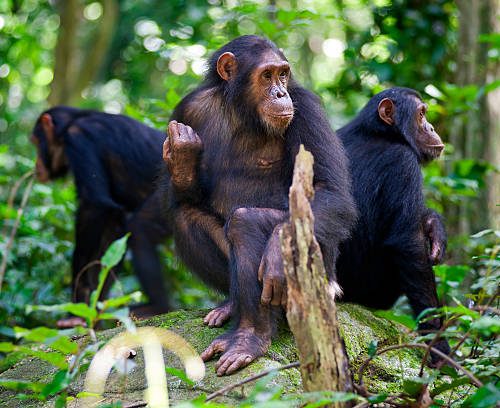
Chimpanzees may be seen moving through the trees, feeding, resting, travelling between areas or interacting with members of their social group.
Sightings are not guaranteed because chimpanzees are wild animals and their movements change naturally. The experience is therefore best approached as a genuine wildlife encounter rather than a guaranteed viewing experience.
MORE THAN CHIMPANZEES
Although chimpanzees are Gombe’s defining attraction, the park supports a much broader range of wildlife.
Its forests are home to several other primate species, including:
- Olive baboons
- Red colobus monkeys
- Red-tailed monkeys
- Blue monkeys
- Vervet monkeys
- Bush babies
The park also supports smaller forest mammals and a rich variety of birds, reptiles, amphibians and plant species.
TANAPA records eight primate species in Gombe and approximately 35 mammal species, demonstrating how much biodiversity exists within this relatively compact protected area.
THE FORESTS & LANDSCAPES OF GOMBE
Gombe’s landscape is dramatically different from the open plains of Serengeti.
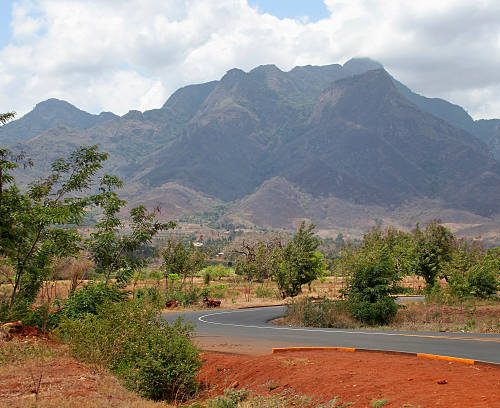
The park consists of steep forested slopes, narrow valleys, streams and rugged terrain descending toward Lake Tanganyika. Its vegetation includes tropical forest communities as well as woodland and other vegetation types associated with the surrounding Rift Valley landscape.
This varied terrain creates a beautiful setting for walking and wildlife exploration.
As you move through the forest, the landscape changes continuously—from shaded trails and dense vegetation to open viewpoints overlooking Lake Tanganyika.
For travelers who enjoy nature, hiking and photography, the scenery is an important part of the Gombe experience.
LAKE TANGANYIKA
One of Gombe’s greatest advantages is its position beside Lake Tanganyika.
The lake creates a spectacular contrast with the surrounding forested mountains, with clear blue water stretching along the park’s shoreline.
Lake Tanganyika is one of Africa’s most remarkable freshwater ecosystems and is recognized for its exceptional depth, length and biodiversity. The wider Lake Tanganyika region supports hundreds of fish species as well as diverse aquatic and shoreline ecosystems.
For visitors, the lake provides more than scenery. Depending on park conditions and the itinerary, travelers can enjoy activities such as lake excursions, swimming and snorkeling alongside their forest experiences.
The result is an unusual combination of chimpanzee trekking, rainforest exploration and lakeside relaxation within one destination.
THINGS TO DO IN GOMBE NATIONAL PARK
01 — Chimpanzee Trekking
The signature Gombe experience is guided chimpanzee trekking through the forest.
Visitors walk along established trails with park guides and trackers while searching for chimpanzee communities. The trek also provides opportunities to observe the forest ecosystem and other primates along the way.
02 — Forest Hiking
Gombe’s steep valleys and forest trails make it an excellent destination for travelers who enjoy walking and exploring nature on foot.
Hiking provides a more immersive way to experience the landscape than a traditional vehicle-based safari.
03 — Waterfall Exploration
The park contains beautiful forest waterfalls, including Kakombe Falls, which is among the area’s notable natural attractions.
Waterfalls provide scenic stops during forest exploration and add another dimension to Gombe beyond chimpanzee trekking.
04 — Birdwatching
Gombe’s forest habitat supports a rich bird community, including forest species and seasonal migrants.
Birdwatchers can look for species such as fish eagles, palm-nut vultures, paradise flycatchers and Schalow’s turaco. TANAPA records approximately 287 bird species in the park.
05 — Lake Tanganyika Activities
The lake provides opportunities for selected water-based experiences such as boat excursions, swimming and snorkeling, depending on local conditions and park regulations.
WHY GOMBE IS DIFFERENT FROM TANZANIA’S CLASSIC SAFARI PARKS
Gombe offers an entirely different style of wildlife experience.
There are no vast savannah plains filled with safari vehicles. Instead, wildlife exploration takes place largely on foot, inside a forest ecosystem, with chimpanzees and other primates as the main focus.
The experience is quieter, more intimate and more immersive.
Rather than driving from one wildlife sighting to another, visitors follow forest trails, listen to the sounds of the woodland and experience the environment at walking pace.
For travelers who have already experienced Serengeti or Ngorongoro, Gombe offers an opportunity to discover another side of Tanzania.
GOMBE & CONSERVATION
Gombe is internationally important for both chimpanzee conservation and scientific research.
The park forms part of the wider Gombe-Masito-Ugalla Biosphere Reserve, recognized by UNESCO’s Man and the Biosphere Programme. The broader landscape supports important forest ecosystems, chimpanzees and other wildlife while also involving surrounding communities in conservation and nature-based tourism.
The long-running research tradition established by Jane Goodall has also helped make Gombe one of the world’s best-known locations for understanding wild chimpanzee behavior.
Responsible tourism plays an important role in supporting the protection of this fragile forest environment.
BEST TIME TO VISIT GOMBE NATIONAL PARK
Gombe can be visited throughout the year, but conditions can vary significantly with rainfall.
For travelers primarily interested in chimpanzee trekking and forest hiking, drier periods are generally more comfortable for walking, as trails can become wet and slippery during heavier rainfall.
The wetter months, however, bring lush vegetation and a vibrant forest atmosphere, making Gombe particularly beautiful for travelers who appreciate rainforest scenery and photography.
The best time ultimately depends on whether your priority is trekking conditions, wildlife experience, photography or combining Gombe with other destinations in Tanzania.
HOW TO GET TO GOMBE NATIONAL PARK
Gombe’s remote location is part of its appeal.
Most visitors travel first to Kigoma, the principal gateway to western Tanzania’s Lake Tanganyika region.
From Kigoma, Gombe is accessed by boat across Lake Tanganyika, providing a scenic transition from mainland Tanzania into the forested wilderness of the national park.
Because of its remote setting, Gombe is best incorporated into a carefully planned itinerary that takes domestic flights, boat transfers, accommodation and park activities into consideration.
WHO SHOULD VISIT GOMBE?
Gombe National Park is particularly well suited to:
- Chimpanzee and primate enthusiasts
- Wildlife photographers
- Nature lovers
- Birdwatchers
- Hikers and adventure travelers
- Travelers interested in conservation
- Visitors fascinated by Jane Goodall’s legacy
- Travelers looking for remote Tanzania
- Repeat Tanzania visitors seeking something beyond the traditional safari circuit
- Travelers combining wildlife with Lake Tanganyika experiences
GOMBE NATIONAL PARK AT A GLANCE
| Feature | Details |
|---|---|
| Location | Kigoma Region, Western Tanzania |
| Landscape | Tropical forest, steep valleys, mountains & Lake Tanganyika shoreline |
| Park Size | Approximately 52 km² |
| Established as National Park | 1968 |
| Main Attraction | Wild chimpanzees |
| Famous Research Legacy | Jane Goodall’s chimpanzee research |
| Other Wildlife | Baboons, red colobus, blue monkeys, red-tailed monkeys and other forest species |
| Birdlife | Approximately 287 recorded species |
| Main Activities | Chimpanzee trekking, hiking, birdwatching, waterfall visits & lake activities |
| Gateway | Kigoma |
| Access | Kigoma followed by boat transfer |
| Major Landscape Feature | Lake Tanganyika |
| Conservation Importance | Chimpanzee research, forest conservation & biodiversity |
WHY VISIT GOMBE NATIONAL PARK?
Gombe is not simply another wildlife destination. It is a place where science, conservation, wildlife and landscape come together.
Here, the forest is the safari vehicle. The chimpanzees are the stars. Lake Tanganyika provides the backdrop, while decades of research give the destination a depth and significance rarely found elsewhere.
A journey to Gombe offers the chance to walk through the same forest environment that helped transform our understanding of chimpanzees and their behavior, while experiencing one of Western Tanzania’s most beautiful and secluded landscapes.
For travelers seeking a more intimate, educational and adventurous side of Tanzania, Gombe National Park is an exceptional destination.
Discover Gombe with Nabaki Safaris
Explore Gombe National Park with Nabaki Safaris, the best tour operator in Tanzania, and experience a carefully planned journey into one of Tanzania’s most remarkable chimpanzee destinations.
From chimpanzee trekking and forest exploration to the shores of Lake Tanganyika, our itineraries can be tailored around your interests, travel style and wider Tanzania adventure.
Featured
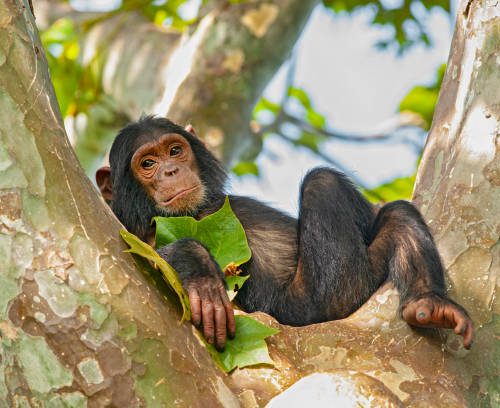
Experience an extraordinary journey into western Tanzania on this 8-Day Tanzania Chimpanzee Safari, combining the legendary chimpanzee forests of Gombe Stream National Park with the...
Duration
8 Days - 7 Nights
$1500
/ person
Next Departures
October 5, 2026 (Available)October 6, 2026 (Available)October 7, 2026 (Available)