
- 2
- 1
- 2
- 1
Mikumi
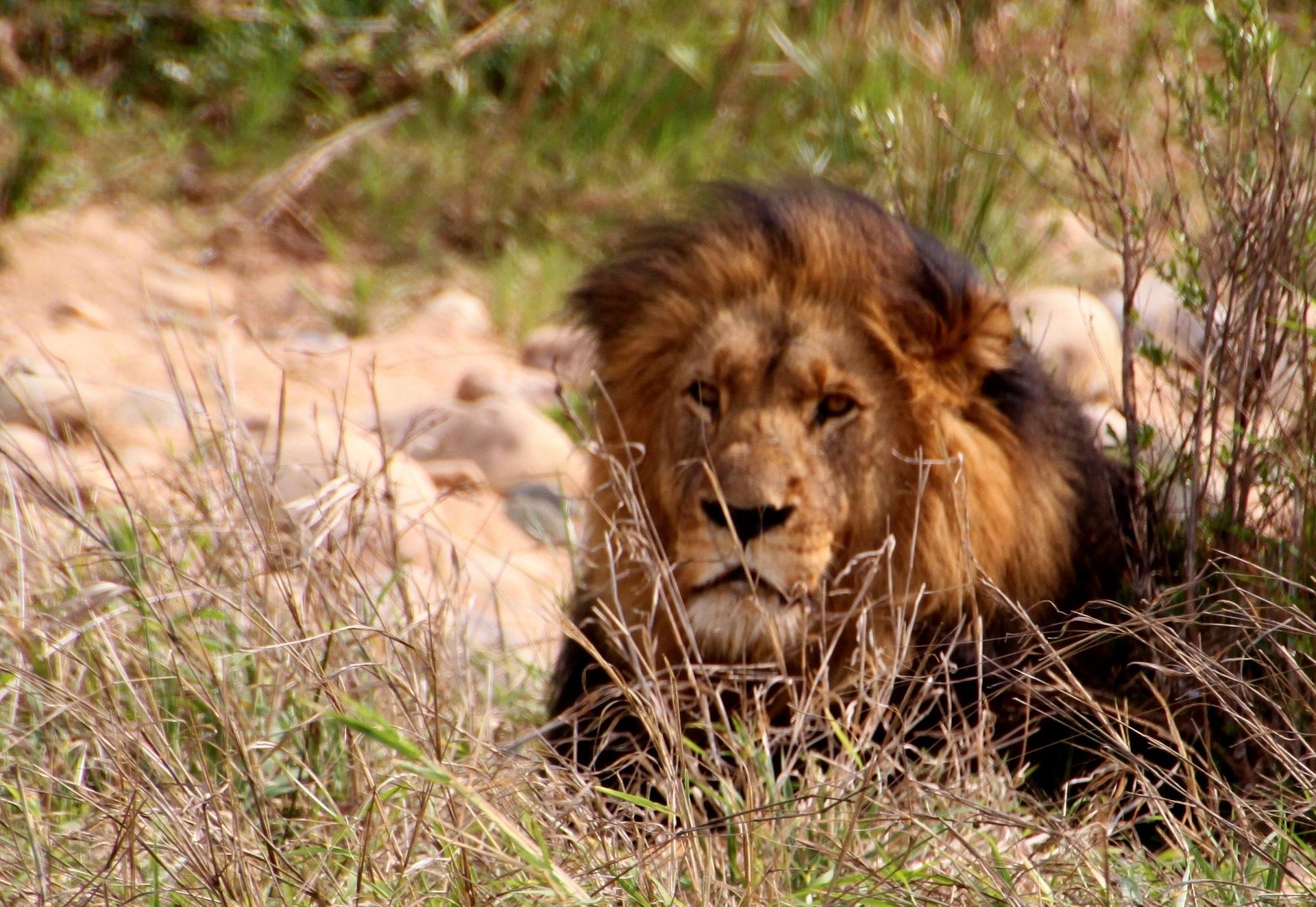
Where Open Plains, Wildlife & Southern Tanzania Come Together
01 — OVERVIEW
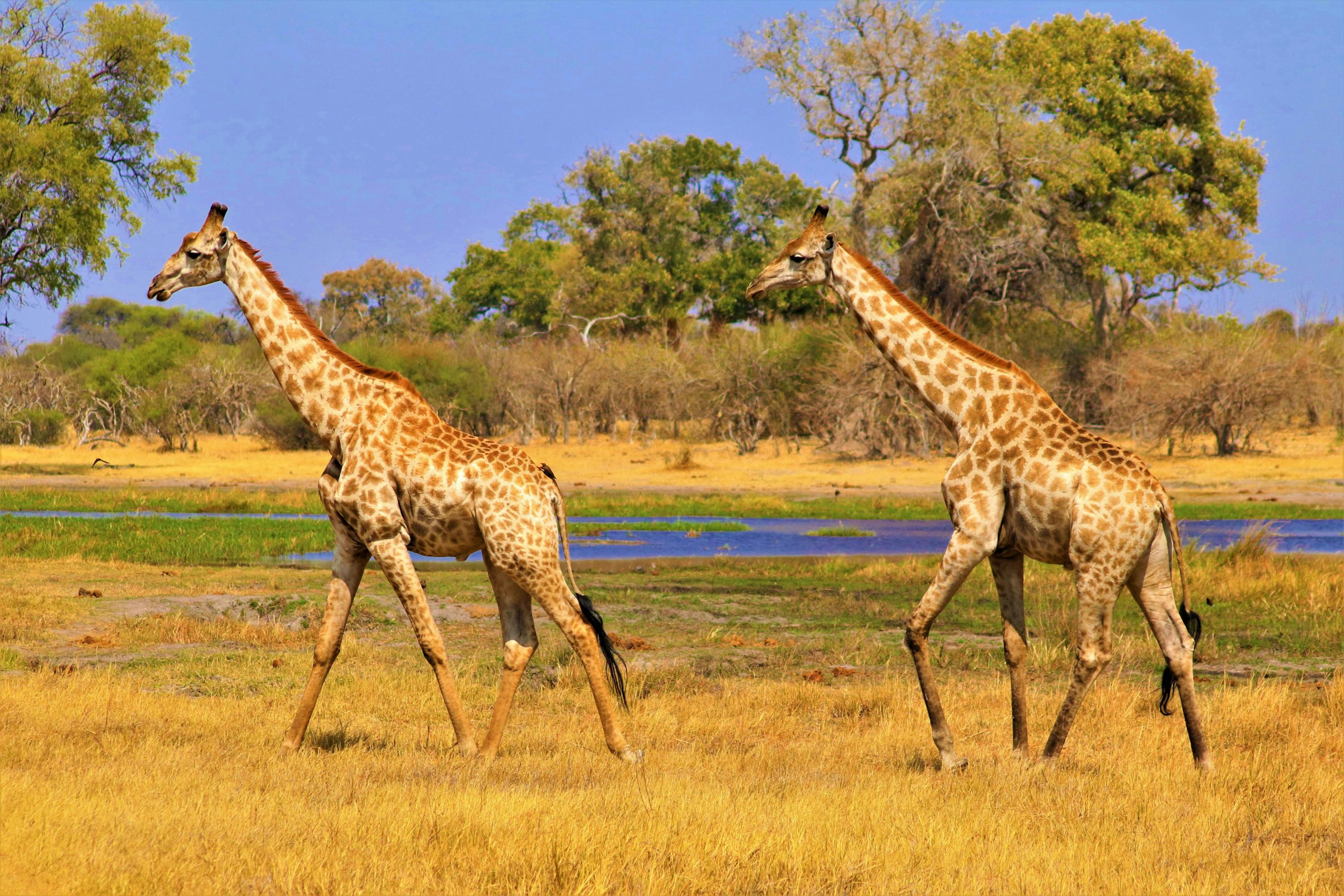
Mikumi National Park is one of Tanzania’s most accessible and rewarding wildlife destinations, offering an authentic safari experience within the landscapes of southern Tanzania.
Located between the Uluguru Mountains and the Lumango Mountains, Mikumi is characterized by open grasslands, woodland, seasonal wetlands, and the expansive Mkata River floodplain. These varied habitats support a wide range of wildlife and create excellent opportunities for game viewing.
The park is particularly appealing to travelers who want to experience Tanzania’s wildlife without traveling as far as some of the country’s more remote safari destinations.
Its location along the road connecting Dar es Salaam with southern Tanzania also makes Mikumi an excellent option for short safaris, weekend escapes, and longer Southern Tanzania safari circuits.
Mikumi can be visited as a standalone safari or combined with destinations such as Udzungwa Mountains National Park, Ruaha National Park, and Nyerere National Park.
02 — WHERE IS MIKUMI NATIONAL PARK?
Mikumi National Park is located in southern Tanzania, approximately southwest of Dar es Salaam.
The park forms part of the larger Selous ecosystem, connecting it ecologically with other protected areas and wildlife landscapes in southern Tanzania.
Its strategic location makes it particularly convenient for travelers starting their safari from Dar es Salaam.
A Southern Tanzania journey can follow:
Dar es Salaam → Mikumi → Udzungwa → Ruaha → Nyerere
Mikumi can also be visited independently for travelers who have only a few days available for a Tanzania safari.
03 — THE MKATA RIVER FLOODPLAIN
The Mkata River floodplain is one of the defining landscapes of Mikumi National Park.
The broad open plain provides important grazing habitat for large herbivores and creates wide views across the park.
During different seasons, the appearance of the floodplain changes considerably. Fresh vegetation can transform the landscape after rainfall, while drier periods create golden grasslands and can influence wildlife distribution around available water.
The openness of the Mkata floodplain can make it particularly rewarding for game drives, photography, and observing animals against the expansive Southern Tanzania landscape.
04 — WILDLIFE OF MIKUMI
Mikumi supports a diverse collection of African wildlife.
Visitors may encounter:
- African elephants
- Lions
- Giraffes
- Zebras
- African buffaloes
- Wildebeest
- Impalas
- Elands
- Hippos
- Warthogs
- Baboons
- Monkeys
- Leopards
- Hyenas
- Various antelope species
The exact wildlife experience varies according to season, weather, habitat, and animal movement.
No safari can guarantee particular sightings, but Mikumi’s combination of open plains and diverse habitats creates strong opportunities for wildlife viewing.
05 — ELEPHANTS OF MIKUMI
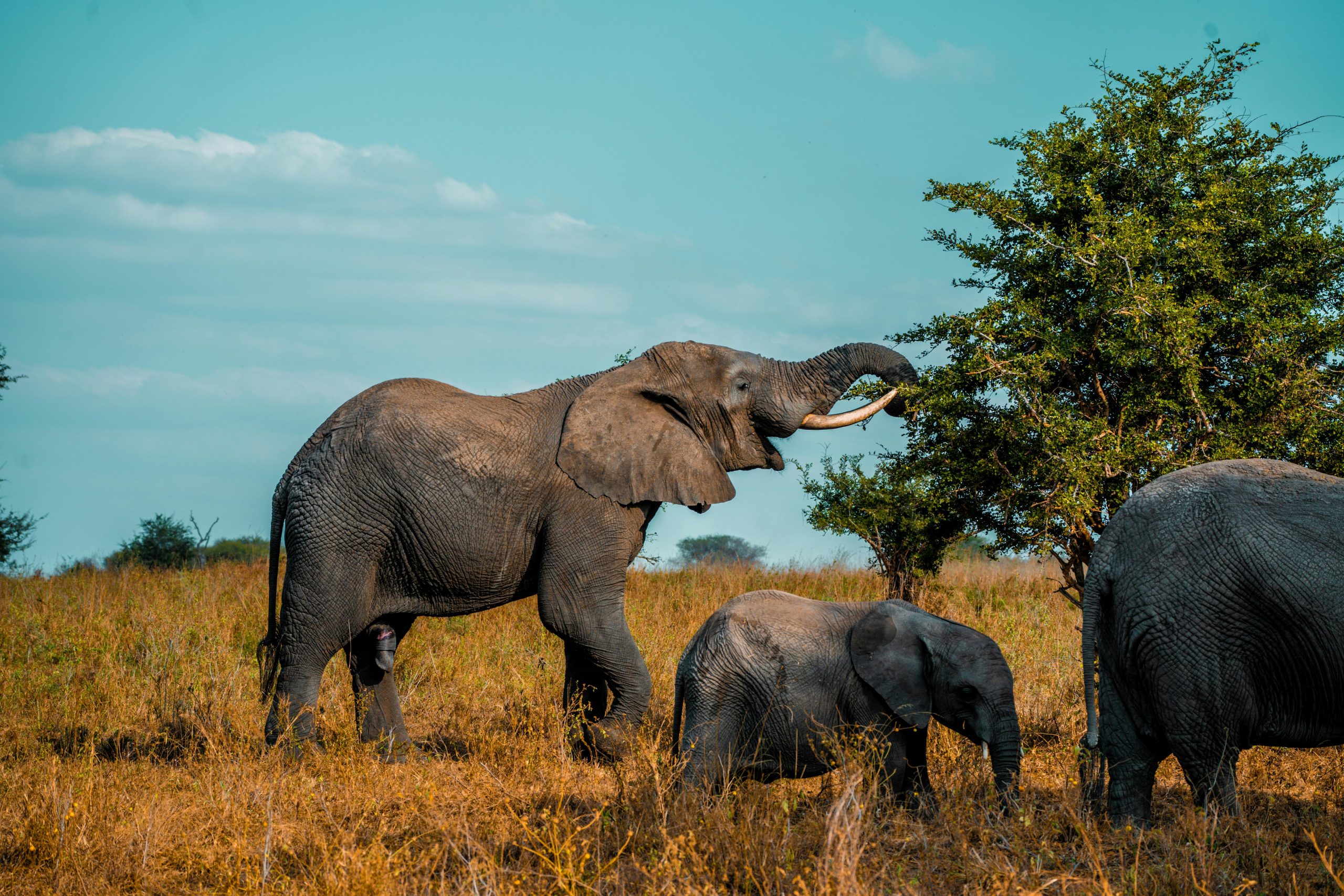
Elephants are among the most impressive animals to encounter in Mikumi.
Large elephant groups can sometimes be observed moving across open areas, feeding on vegetation, or gathering around water.
The contrast between elephants and the open Mkata floodplain can create spectacular safari scenes.
Watching elephants in their natural environment also provides an opportunity to appreciate their social behavior, family structures, and relationship with the wider ecosystem.
06 — LIONS OF MIKUMI
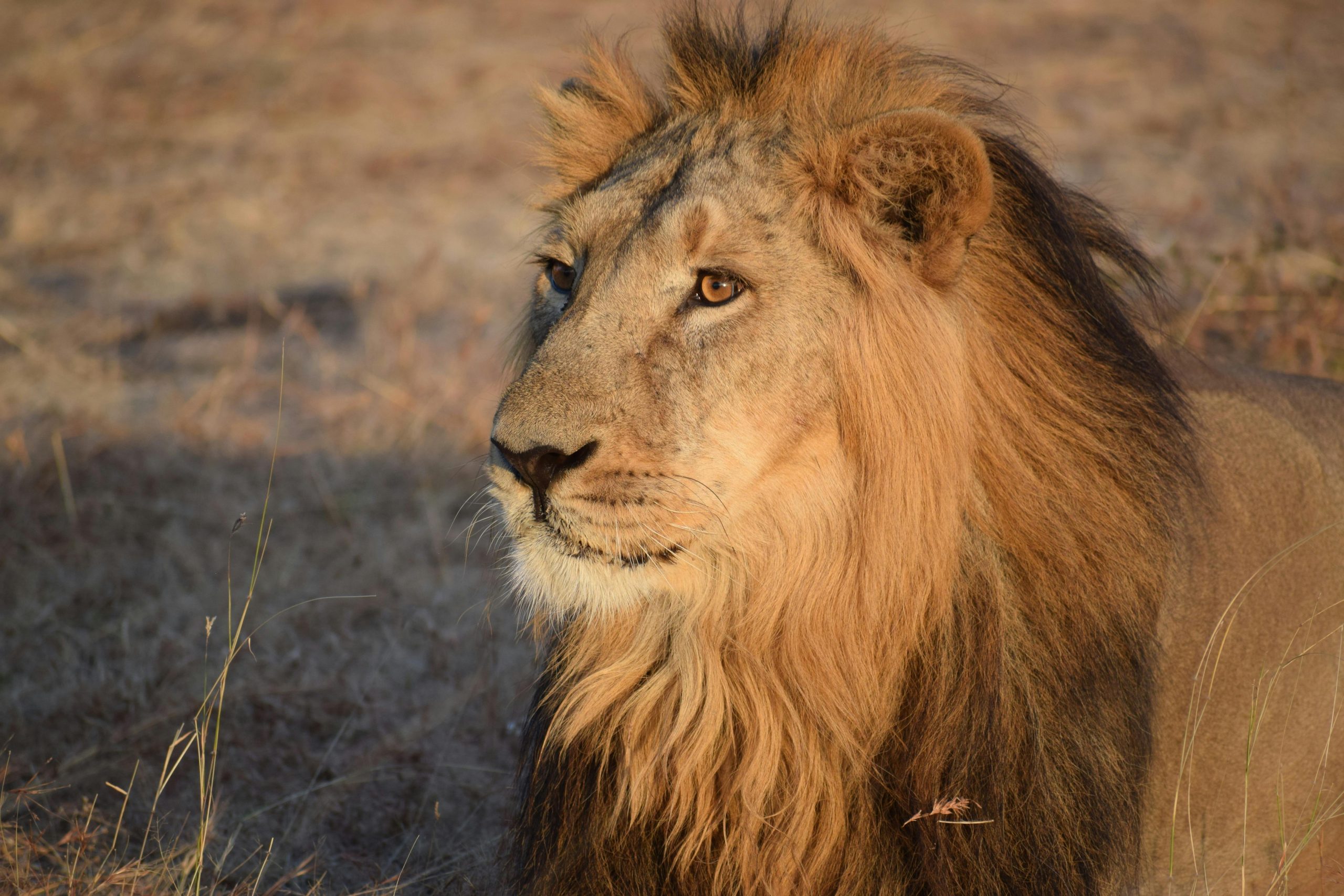
Mikumi is home to lions, making predator encounters an important part of the safari experience.
Lions may be found in areas where prey is abundant, particularly around productive grasslands and water sources.
Travelers may encounter lions resting, moving through the grassland, or observing potential prey.
As with all wild animals, lion sightings depend on natural behavior and cannot be guaranteed.
An experienced safari guide can help interpret tracks, behavior, habitat, and other signs that improve the opportunity to find predators.
07 — GIRAFFES, ZEBRAS & HERBIVORES
Mikumi’s open plains provide habitat for many herbivores.
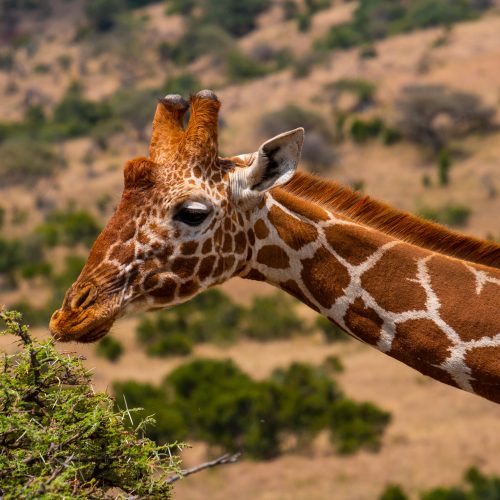
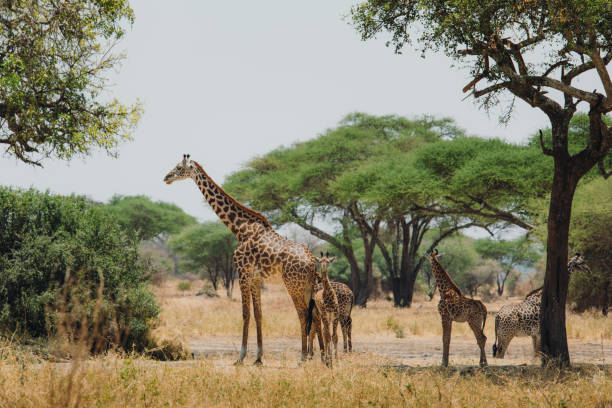
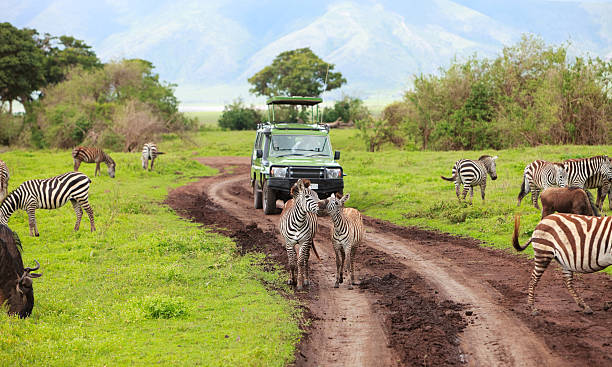
Giraffes can often be seen browsing on vegetation, while zebras and wildebeest move across the grasslands.
Buffaloes, impalas, elands, warthogs, and other grazing and browsing animals contribute to the rich wildlife environment.
These herbivores also form an important part of the food chain, supporting the park’s predator populations.
For travelers interested in observing the relationships between different wildlife species, Mikumi offers a fascinating ecosystem to explore.
08 — HIPPOS & WATER SOURCES
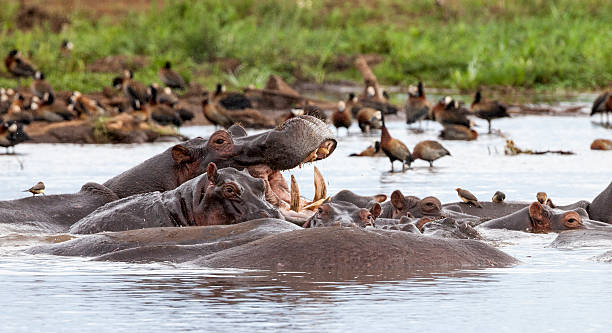
Mikumi’s rivers, pools, and seasonal wetlands provide important habitat for water-dependent wildlife.
Hippos can be associated with suitable water environments, where they spend much of their time during the heat of the day.
Water sources also attract other wildlife, particularly during drier periods.
The relationship between water availability and animal movement is an important part of understanding the seasonal safari experience in Mikumi.
09 — MIKUMI’S LANDSCAPES & HABITATS
Mikumi is not simply a park of open grasslands.
Its landscapes include:
- Open savannah
- Mkata floodplain
- Miombo woodland
- Acacia woodland
- Seasonal wetlands
- Riverine habitats
- Rocky areas
- Mountain backdrops
This combination of habitats creates different opportunities for wildlife observation throughout the park.
The surrounding mountains also add dramatic scenery to the safari experience, providing a visual contrast to the broad plains below.
10 — THE ULUGURU & LUMANGO MOUNTAINS
Mountain landscapes surrounding Mikumi contribute to the park’s distinctive character.
The Uluguru and Lumango mountain ranges form important geographic features around the wider Mikumi area.
Their presence creates scenic backdrops during game drives and reinforces the contrast between Southern Tanzania’s open floodplains and surrounding highlands.
For photographers, the combination of wildlife, plains, woodland, and distant mountains can create particularly striking compositions.
11 — BIRDWATCHING IN MIKUMI
Mikumi is also an attractive destination for birdwatchers.
Its mixture of floodplains, woodland, grassland, rivers, and wetlands provides habitats for many bird species.
Depending on the season, travelers may encounter:
- Eagles
- Vultures
- Storks
- Herons
- Egrets
- Kingfishers
- Hornbills
- Rollers
- Bee-eaters
- Weavers
- Ostriches
- Bustards
- Various woodland and savannah species
Migratory birds may also add to the diversity during suitable periods of the year.
12 — MIKUMI FOR PHOTOGRAPHY
Mikumi provides excellent opportunities for travelers interested in wildlife and landscape photography.
The open Mkata floodplain allows animals to be photographed against wide natural backgrounds, while woodland areas offer more intimate scenes.
Some of the most memorable photographic subjects may include:
- Elephants on the plains
- Giraffes against mountain backgrounds
- Zebras across open grassland
- Lions resting in the shade
- Buffalo herds
- Birds around wetlands
- Golden savannah landscapes
Early morning and late afternoon often provide attractive natural light and active wildlife conditions.
13 — THINGS TO DO IN MIKUMI NATIONAL PARK
Game Drives
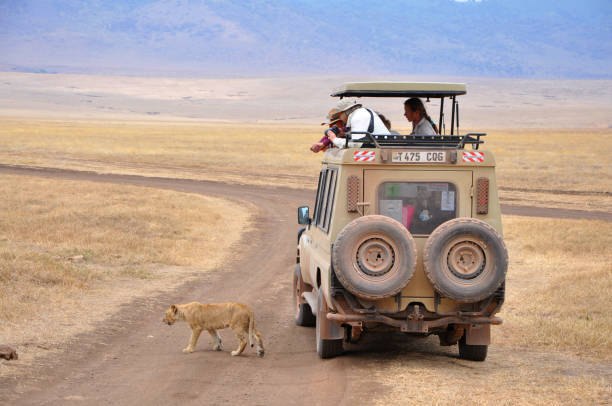
Game drives are the main way to explore Mikumi National Park.
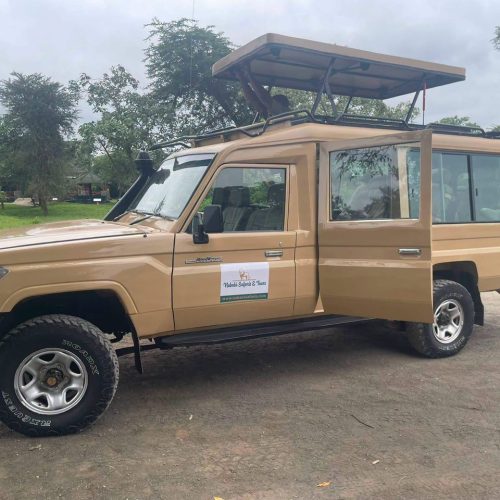
A safari vehicle allows travelers to cover larger areas while searching for wildlife across different habitats.
Wildlife Photography
The open floodplain, wildlife, woodland, and mountain scenery provide excellent photographic opportunities.
Birdwatching
Mikumi’s diverse habitats support a broad range of resident and migratory birdlife.
Multi-Day Safari
Mikumi can be included as part of a longer Southern Tanzania itinerary connecting several protected areas.
Southern Tanzania Safari Circuit
Travelers can combine Mikumi with Udzungwa, Ruaha, and Nyerere for a more extensive exploration of southern Tanzania.
14 — MIKUMI DAY SAFARIS
One of Mikumi’s major advantages is its accessibility from Dar es Salaam.
For travelers with limited time, a Mikumi safari can be organized as a short wildlife escape.
A typical day safari may follow:
Early Departure from Dar es Salaam → Mikumi National Park → Game Drive → Lunch → Afternoon Wildlife Exploration → Return Journey
Travel times and exact schedules depend on road conditions, safari arrangements, and the starting location.
For travelers with more time, an overnight or multi-day stay allows a slower pace and more opportunities to explore the park.
15 — MIKUMI AS A SOUTHERN TANZANIA SAFARI GATEWAY
Mikumi can serve as an excellent introduction to the wider Southern Tanzania safari circuit.
A longer journey may continue from Mikumi to:
Udzungwa Mountains National Park
for forest landscapes, hiking, waterfalls, and biodiversity.
From there, travelers can continue to:
Ruaha National Park
for expansive wilderness and exceptional wildlife experiences.
The journey can then extend toward:
Nyerere National Park
for wildlife, wetlands, and Rufiji River experiences.
This combination provides a broader view of Tanzania beyond the more frequently visited Northern Safari Circuit.
16 — MIKUMI & UDZUNGWA COMBINATION
Mikumi and Udzungwa provide a particularly interesting contrast.
Mikumi is primarily a wildlife and savannah destination, while Udzungwa is known for its forested mountains, hiking opportunities, waterfalls, and biodiversity.
Combining the two allows travelers to experience both:
Savannah Wildlife + Mountain Forest
within one Southern Tanzania journey.
This is an excellent option for travelers who want more variety than a conventional game-drive-only safari.
17 — BEST TIME TO VISIT MIKUMI NATIONAL PARK
Mikumi can be visited throughout the year, although different seasons create different safari experiences.
Dry Season
During drier periods, vegetation can become less dense and wildlife may concentrate around remaining water sources.
These conditions can provide favorable opportunities for game viewing.
Green Season
Following rainfall, the landscape becomes greener and more vibrant.
This period can be attractive for travelers interested in scenery, photography, birdlife, and a less dry-looking landscape.
Birdwatching
Birdwatching can be particularly rewarding when migratory species are present alongside resident birds.
The ideal travel period ultimately depends on whether your priority is general wildlife viewing, photography, birdwatching, or combining Mikumi with other Southern Tanzania destinations.
18 — HOW TO GET TO MIKUMI
Mikumi is one of the more accessible safari destinations in Tanzania.
By Road
The park can be reached by road from Dar es Salaam and other destinations in southern Tanzania.
This accessibility makes it particularly suitable for short safari programs.
By Air
Depending on the itinerary and available schedules, travelers may also use domestic air services serving the wider region.
For most travelers beginning in Dar es Salaam, road travel is a practical option.
19 — MIKUMI CLIMATE & ENVIRONMENT
Mikumi has a warm tropical climate, with conditions influenced by season, elevation, and rainfall.
The landscape changes considerably throughout the year.
Rainfall can bring fresh vegetation, flowing water, and greener scenery, while drier conditions can create golden grasslands and influence wildlife concentrations.
Early mornings and evenings can be cooler than the middle of the day, making layered clothing useful during game drives.
20 — MIKUMI FOR FIRST-TIME SAFARI TRAVELERS
Mikumi can be an excellent introduction to Tanzania’s wildlife.
Its accessibility means travelers do not necessarily need a long itinerary to experience a genuine national park safari.
A short Mikumi trip can provide opportunities to see elephants, giraffes, zebras, buffaloes, antelopes, predators, and numerous bird species.
For travelers with more time, Mikumi becomes even more valuable when incorporated into a broader Southern Tanzania adventure.
21 — WHO SHOULD VISIT MIKUMI?
Mikumi National Park is suitable for:
- First-time safari travelers
- Travelers starting from Dar es Salaam
- Families
- Couples
- Weekend travelers
- Wildlife enthusiasts
- Photographers
- Birdwatchers
- Private safari travelers
- Travelers with limited time
- Southern Tanzania explorers
- Travelers looking for an alternative to the Northern Safari Circuit
Its accessibility and diverse wildlife make it particularly attractive for short and medium-length safari itineraries.
22 — MIKUMI NATIONAL PARK AT A GLANCE
| Feature | Details |
|---|---|
| Location | Southern Tanzania |
| Destination Type | National Park |
| Famous For | Mkata floodplain & accessible wildlife safari |
| Main Landscape | Savannah, floodplain, woodland & wetlands |
| Main Wildlife | Elephants, lions, giraffes, zebras, buffaloes & antelopes |
| Main Activity | Game drives |
| Birdlife | Diverse resident & migratory species |
| Photography | Excellent |
| Main Gateway | Dar es Salaam |
| Access | Road & selected domestic air connections |
| Day Safari | Possible from Dar es Salaam |
| Nearby Destinations | Udzungwa, Ruaha & Nyerere |
| Best For | Short safaris & Southern Tanzania circuits |
23 — WHY VISIT MIKUMI NATIONAL PARK?
Mikumi offers travelers an accessible way to experience the wild landscapes of southern Tanzania.
Its open floodplains, elephants, giraffes, lions, zebras, buffaloes, wetlands, woodland, and surrounding mountains create a safari environment with its own distinctive character.
For travelers based in or arriving through Dar es Salaam, Mikumi can provide a convenient escape from the city into a genuine wildlife landscape.
It is also an excellent starting point for exploring Southern Tanzania more deeply, especially when combined with Udzungwa, Ruaha, and Nyerere.
Mikumi may be easier to reach than some of Tanzania’s remote parks, but its wildlife experience remains distinctly African and deeply rewarding.
24 — DISCOVER MIKUMI WITH NABAKI SAFARIS
A successful Mikumi safari depends on thoughtful planning, experienced guiding, and choosing an itinerary that matches your available time and interests.
With Nabaki Safaris, the best tour operator in Tanzania, travelers can explore Mikumi as a short safari from Dar es Salaam or incorporate it into a longer Southern Tanzania adventure.
From the open Mkata floodplain and elephant encounters to the landscapes surrounding Udzungwa, Ruaha, and Nyerere, Mikumi can be the beginning of a remarkable journey through one of Tanzania’s most rewarding safari regions.
Escape the city. Enter the wild. Discover Southern Tanzania.
Plan Your Mikumi Safari with Nabaki Safaris.
Featured
Explore Mikumi, Udzungwa, Ruaha & Nyerere Experience the wild beauty of Southern Tanzania on an unforgettable 10-day Tanzania safari through Mikumi National Park, Udzungwa Mountains...
Duration
10 Days - 9 Nights
$3170
/ person
Next Departures
October 5, 2026 (Available)October 6, 2026 (Available)October 7, 2026 (Available)
Duration
7 Days - 6 Nights
$1905
/ person
Next Departures
October 5, 2026 (Available)October 6, 2026 (Available)October 7, 2026 (Available)