Serengeti safari itineraries

Serengeti Migration Explained: 2026 Complete Guide to the Great Wildebeest Migration, Routes, Timing & Safari Experience

Discover Serengeti migration explained in detail with Nabak Safaris and Tours. Learn migration routes, best time to visit, wildlife movements, and expert safari tips in Tanzania

QUICK SUMMARY

The Serengeti migration explained guide helps travelers understand one of the greatest wildlife spectacles on Earth—the Great Wildebeest Migration. This natural event involves over 1.5 million wildebeest, zebras, and gazelles moving across the Serengeti ecosystem in search of fresh grazing. This guide by Nabak Safaris and Tours explains how the migration works, why it happens, and how travelers can experience it safely and effectively.

WHAT IS THE SERENGETI MIGRATION?

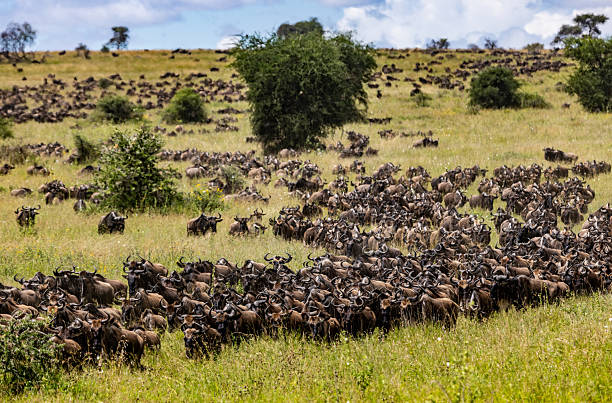
The Serengeti migration, often called the Great Wildebeest Migration, is one of the most extraordinary wildlife events in the world. Every year, millions of animals move across the vast plains of Serengeti National Park and into Kenya’s Maasai Mara in a continuous cycle driven by rainfall and the search for fresh grass.

Understanding Serengeti migration explained is essential for anyone planning a safari in Tanzania because timing and location play a major role in what you will see.

This migration is not a single event but a continuous movement that happens throughout the year. It involves:

  • Over 1.5 million wildebeest
  • Hundreds of thousands of zebras
  • Thousands of gazelles
  • Numerous predators following the herds

At Nabak Safaris and Tours, we help travelers track this movement and plan their safari at the right time to witness the most dramatic moments of the migration.


WHY THE SERENGETI MIGRATION HAPPENS

Serengeti migration explained

The driving force behind the migration is simple: survival.

Animals move in search of:

  • Fresh grazing land
  • Water sources
  • Better environmental conditions

Rainfall patterns determine where grass grows, and the herds follow these patterns across the Serengeti ecosystem.

This natural cycle is the foundation of the Serengeti migration explained concept and explains why the movement is continuous rather than seasonal in a fixed location.


THE SCALE OF THE GREAT MIGRATION

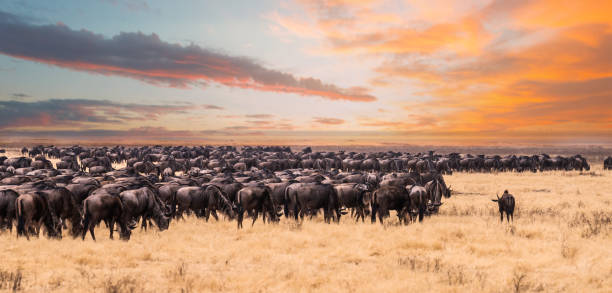
The Serengeti migration is the largest land animal movement on Earth.

Key Facts:

  • Over 1.5 million wildebeest
  • 200,000+ zebras
  • 300,000 gazelles
  • Thousands of predators (lions, crocodiles, hyenas)

This massive movement creates dramatic wildlife scenes that are central to any Serengeti migration explained guide.


KEY STAGES OF THE SERENGETI MIGRATION

The migration follows a circular route through the Serengeti ecosystem:

1. Calving Season (Southern Serengeti)

  • Occurs between January and March
  • Thousands of calves are born daily
  • High predator activity

2. Movement to Central Serengeti

  • Herds begin moving north
  • Increased predator encounters

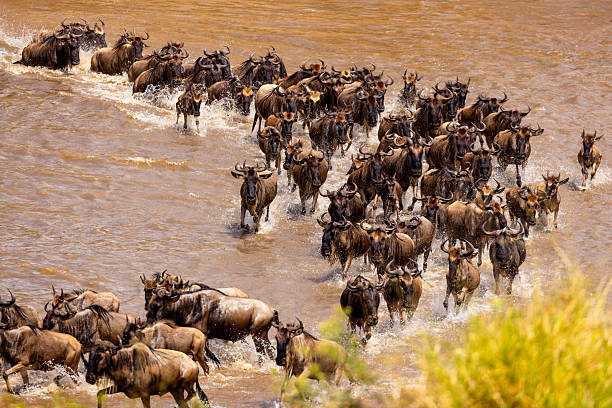
3. Western Corridor Crossing

  • Grumeti River crossings
  • Crocodile attacks and dramatic scenes

4. Northern Serengeti River Crossings

  • Mara River crossings (most famous stage)
  • High-risk crossings with strong currents and predators

5. Return to Southern Plains

  • Cycle repeats as rains return

Each stage plays a critical role in understanding Serengeti migration explained.


WHY SERENGETI MIGRATION IS A GLOBAL ATTRACTION

The migration attracts travelers from all over the world because:

  • It is one of the Seven Natural Wonders of Africa
  • It offers unmatched wildlife viewing
  • It provides dramatic predator-prey interactions
  • It is a year-round safari experience

This makes the Serengeti migration explained guide one of the most searched travel topics globally.


ROLE OF NABAK SAFARIS AND TOURS IN MIGRATION SAFARIS

Serengeti migration explained

Safari Vehicle Amidst the Great Wildebeest Migration in Serengeti National Park with additional vehicled and wildebeest further in the distance.

At Nabak Safaris and Tours, we specialize in migration tracking and planning.

We provide:

  • Real-time migration tracking
  • Expert safari guides
  • Customized migration itineraries
  • Strategic lodge selection based on herd movement
  • Flexible safari planning

This ensures every Serengeti migration explained experience is perfectly timed.


COMMON MISUNDERSTANDINGS ABOUT SERENGETI MIGRATION

Misconception 1: Migration happens in one place

Reality: It moves continuously across regions.

Misconception 2: It only happens once a year

Reality: It is a year-round cycle.

Misconception 3: River crossings happen daily

Reality: Crossings are unpredictable and depend on herd movement.

Understanding these points improves the accuracy of any Serengeti migration explained guide.

DETAILED MIGRATION ROUTES, MONTH-BY-MONTH MOVEMENT & BEST VIEWING LOCATIONS

This section provides a deep and detailed breakdown of the migration routes across Serengeti, including month-by-month movement patterns and the best locations to witness each stage. The Serengeti migration explained guide here focuses on timing, geography, and strategic safari planning to help travelers maximize their experience with Nabak Safaris and Tours

WHY TIMING AND LOCATION DEFINE THE MIGRATION EXPERIENCE

Serengeti migration explained

Understanding Serengeti migration explained requires more than knowing what the migration is—it requires knowing where the herds are and when they move. The Serengeti ecosystem is vast, and the migration follows rainfall patterns rather than fixed dates.

This means that each month offers a different experience, and travelers must plan carefully to be in the right location at the right time.

At Nabak Safaris and Tours, we specialize in tracking herd movement using real-time updates, ensuring that every Serengeti migration explained safari is accurately planned for maximum wildlife viewing.


MONTH-BY-MONTH SERENGETI MIGRATION EXPLAINED

JANUARY – MARCH: CALVING SEASON (SOUTHERN SERENGETI / NDUTU)

This is one of the most important stages in the Serengeti migration explained cycle.

Key Highlights:

  • Over 500,000 calves born within weeks
  • Massive herds spread across southern plains
  • High predator activity (lions, cheetahs, hyenas)

Photography & Viewing Advantage:

  • Easy wildlife spotting due to open plains
  • Frequent predator-prey interactions

This period is ideal for travelers interested in dramatic wildlife behavior.


APRIL – MAY: MOVEMENT NORTH (CENTRAL SERENGETI)

As rains end, herds begin moving toward central Serengeti.

Key Features:

  • Long migration lines across plains
  • Herds moving in large columns
  • Fewer tourists due to rainy season

Serengeti Migration Explained Insight:
Movement becomes more organized, and herds begin preparing for longer travel.


JUNE – JULY: WESTERN CORRIDOR (GRUMETI REGION)

This stage introduces river crossings.

Highlights:

  • Grumeti River crossings
  • Crocodile ambushes
  • Dense wildlife activity

Why It Matters in Serengeti Migration Explained:
This is the first major obstacle in the migration journey.


AUGUST – OCTOBER: NORTHERN SERENGETI (MARA RIVER CROSSINGS)

This is the most famous stage in the Serengeti migration explained guide.

Key Events:

  • Dramatic Mara River crossings
  • Wildebeest jumping into strong currents
  • Crocodile attacks and survival battles

Best Viewing Locations:

  • Northern Serengeti
  • Mara River banks

This is the peak safari season due to high drama and action.


NOVEMBER – DECEMBER: RETURN TO SOUTHERN PLAINS

With short rains starting, herds begin moving south again.

Highlights:

  • Fast-moving migration groups
  • Regrowth of grass in southern Serengeti
  • Less crowded safari experience

This completes the full cycle of the Serengeti migration explained journey.


COMPARISON TABLE: MIGRATION STAGES & BEST VIEWING TIMES

Month Range Location Key Activity Best Experience
Jan–Mar Southern Serengeti Calving season Predator action & newborns
Apr–May Central Serengeti Movement phase Migration lines
Jun–Jul Western Corridor River crossings Crocodile encounters
Aug–Oct Northern Serengeti Mara crossings Dramatic river action
Nov–Dec Southern Serengeti Return migration Scenic movement

BEST LOCATIONS FOR EACH MIGRATION STAGE

A strong Serengeti migration explained guide must highlight location strategy.

Southern Serengeti (Ndutu Area)

  • Best for calving season
  • Flat plains with clear visibility

Central Serengeti (Seronera)

  • Year-round wildlife presence
  • Ideal for transition phases

Western Serengeti (Grumeti)

  • River crossings
  • Dense vegetation

Northern Serengeti

  • Best for Mara River crossings
  • Fewer crowds compared to Maasai Mara

WHY MIGRATION IS UNPREDICTABLE

A critical part of Serengeti migration explained is understanding unpredictability.

Migration depends on:

  • Rainfall patterns
  • Grass availability
  • Water sources
  • Predator pressure

This means exact dates cannot be guaranteed, only estimated.

At Nabak Safaris and Tours, we adjust itineraries dynamically to follow real-time herd movement.


STRATEGIC SAFARI PLANNING FOR MIGRATION

To maximize the experience:

  • Choose travel dates based on migration stage
  • Stay in lodges near active migration zones
  • Allow flexible travel days
  • Work with experienced safari operators

This is essential in any Serengeti migration explained safari plan.


EXPERT INSIGHT FROM NABAK SAFARIS AND TOURS

Our experience shows:

  • Northern Serengeti is best for dramatic action
  • Southern Serengeti is best for photography
  • Central Serengeti is best for consistent wildlife
  • Western corridor offers unique river scenes

We use this knowledge to create optimized Serengeti migration explained itineraries.

WILDLIFE BEHAVIOR, PREDATOR–PREY INTERACTIONS & REAL SAFARI EXPERIENCE

Serengeti migration explained

This section delivers a deep understanding of animal behavior during the Great Migration, focusing on predator–prey dynamics, herd movement patterns, survival strategies, and real safari experiences. The Serengeti migration explained here goes beyond routes and timing, revealing how wildlife interacts, adapts, and survives in one of the most intense natural ecosystems on Earth.

THE MIGRATION AS A LIVING ECOSYSTEM

To truly understand Serengeti migration explained, one must see it not just as movement, but as a complex living system. The migration is driven by survival, but it also creates one of the most intense predator–prey environments in the world.

Every step taken by wildebeest herds affects predators, scavengers, birds, and even vegetation. This interconnected system creates constant action, making Serengeti one of the most dynamic wildlife environments globally.

With Nabak Safaris and Tours, travelers don’t just see animals—they understand behavior, patterns, and the deeper meaning behind every movement in the Serengeti migration explained cycle.


HERD BEHAVIOR DURING THE GREAT MIGRATION

1. Group Movement Strategy

Wildebeest move in massive herds for protection.

Key Characteristics:

  • Safety in numbers reduces individual risk
  • Coordinated movement reduces predator success
  • Strong instinct-driven migration patterns

This behavior is central to the Serengeti migration explained system, as it ensures survival across long distances.


2. Leadership and Instinct

Interestingly, migration is not led by a single leader.

  • Movement is instinct-based
  • Herd decisions are influenced by environmental signals
  • Rainfall and grass availability guide direction

This decentralized system makes the Serengeti migration explained phenomenon unique in the animal kingdom.


3. Calf Survival Behavior

During calving season:

  • Calves stand within minutes of birth
  • They learn to run within hours
  • Mothers protect them within herd structure

This rapid adaptation is critical in the Serengeti migration explained survival process.


PREDATOR–PREY INTERACTIONS IN SERENGETI

The migration attracts predators in large numbers.

1. Lions

  • Hunt in coordinated groups
  • Target weak or isolated animals
  • Often attack during early morning or evening

Lions are among the most visible predators in the Serengeti migration explained ecosystem.


2. Cheetahs

  • Rely on speed rather than strength
  • Hunt in open plains
  • Focus on smaller or younger prey

Their hunting style adds variety to predator behavior.


3. Hyenas

  • Highly intelligent and opportunistic
  • Hunt as well as scavenge
  • Work in clans

Hyenas play a major role in maintaining balance within the Serengeti migration explained system.


4. Crocodiles

  • Dominate river crossing zones
  • Ambush prey in water
  • Remain hidden until attack

Crocodiles are key players during dramatic river crossing events.


DRAMATIC RIVER CROSSINGS EXPLAINED

One of the most iconic parts of Serengeti migration explained is river crossing behavior.

Why Crossings Are Dangerous:

  • Strong water currents
  • Steep riverbanks
  • Crocodile attacks
  • Panic within herds

Why Animals Still Cross:

  • Need to reach fresh grazing
  • Follow herd instinct
  • No alternative migration route

Crossings often involve hesitation, sudden movement, and chaos—creating some of the most dramatic wildlife scenes on Earth.


SURVIVAL STRATEGIES IN THE MIGRATION

Animals rely on multiple survival strategies:

1. Speed and Endurance

Wildebeest travel long distances quickly.

2. Group Protection

Large numbers confuse predators.

3. Constant Movement

Avoids overgrazing and reduces risk.

4. Awareness and Instinct

Animals react quickly to danger signals.

These strategies are essential to understanding Serengeti migration explained survival dynamics.


SCAVENGERS AND SECONDARY WILDLIFE

Not all animals hunt—many benefit indirectly.

Scavengers Include:

  • Vultures
  • Jackals
  • Hyenas

They feed on leftovers from predator kills, ensuring nothing goes to waste.

This recycling system is a key ecological aspect of the Serengeti migration explained environment.


REAL SAFARI EXPERIENCE DURING MIGRATION

Travelers on a migration safari experience:

  • Continuous wildlife movement
  • Close predator encounters
  • Unpredictable animal behavior
  • Long game drives following herds
  • Unique photography opportunities

With Nabak Safaris and Tours, guests are guided through these experiences safely and strategically.


WHAT MAKES MIGRATION SAFARI UNIQUE

Compared to regular safaris:

  • Higher concentration of animals
  • More dramatic wildlife action
  • Greater unpredictability
  • Constant movement rather than static viewing

This is why the Serengeti migration explained safari experience is considered one of the best in the world.


PHOTOGRAPHY AND VIEWING STRATEGIES

To capture the best moments:

  • Be patient and observe herd movement
  • Focus on edges of herds where predators attack
  • Use early morning light
  • Position vehicles strategically

Professional guidance from Nabak Safaris and Tours ensures better positioning and timing.


CHALLENGES DURING MIGRATION SAFARI

Even though exciting, migration safaris come with challenges:

  • Long hours of tracking animals
  • Dust and changing weather conditions
  • Unpredictable animal movement
  • Crowds during peak season

A well-planned Serengeti migration explained safari helps minimize these challenges.


EXPERT INSIGHT FROM NABAK SAFARIS AND TOURS

Our experience shows:

  • Patience is key to seeing dramatic moments
  • Flexibility improves chances of sightings
  • Location matters more than timing alone
  • Professional guides make a major difference

These insights improve the overall Serengeti migration explained experience.

TRAVEL PLANNING, COST BREAKDOWN, FAQs & FINAL EXPERT GUIDE

This final section of the Serengeti migration explained guide provides a deep understanding of how to plan a migration safari, including travel costs, itinerary strategies, accommodation choices, and frequently asked questions. It also offers expert recommendations from Nabak Safaris and Tours to help travelers experience the Great Migration efficiently, safely, and at the right time.

TURNING KNOWLEDGE INTO A REAL SAFARI EXPERIENCE

After understanding routes, timing, and wildlife behavior, the final step in the Serengeti migration explained journey is planning. Many travelers know about the migration but fail to experience it properly due to poor timing, wrong location, or lack of expert guidance.

Planning a migration safari is different from a regular safari. It requires flexibility, accurate timing, and a deep understanding of herd movement. Since the migration is unpredictable, travelers must rely on experienced operators.

At Nabak Safaris and Tours, we transform the theory of Serengeti migration explained into a real, well-organized safari experience by aligning travel dates with actual wildlife movement.


HOW TO PLAN A SERENGETI MIGRATION SAFARI

1. Choose the Right Time Based on Migration Stage

Instead of choosing random travel dates, align your visit with specific migration events:

  • January–March → Calving season
  • June–July → Grumeti River crossings
  • August–October → Mara River crossings
  • November–December → Return migration

This is the most important step in any Serengeti migration explained safari plan.


2. Select the Right Location

Location matters more than duration.

  • Southern Serengeti → Calving
  • Central Serengeti → Transition
  • Western Serengeti → Grumeti crossings
  • Northern Serengeti → Mara crossings

Choosing the correct region ensures you are close to the migration.


3. Book with a Professional Safari Operator

Working with experienced operators like Nabak Safaris and Tours ensures:

  • Real-time migration tracking
  • Flexible itinerary adjustments
  • Strategic accommodation selection
  • Professional safari guides

This significantly improves your Serengeti migration explained experience.


SERENGETI MIGRATION SAFARI COST BREAKDOWN

Cost varies depending on travel style, duration, and season.

Budget Safari

  • $200 – $350 per person per day
  • Basic lodges or camping
  • Shared safari vehicles

Mid-Range Safari

  • $350 – $700 per person per day
  • Comfortable lodges
  • Professional guiding services

Luxury Safari

  • $700 – $1500+ per person per day
  • High-end lodges and tented camps
  • Private vehicles and premium services

Understanding cost options is essential in the Serengeti migration explained planning process.


COMPARISON TABLE: SAFARI TYPES

Safari Type Cost Range Accommodation Experience Level
Budget Low Camping/basic lodges Basic
Mid-Range Moderate Standard lodges Comfortable
Luxury High Premium camps/lodges Exclusive

ACCOMMODATION STRATEGY DURING MIGRATION

Accommodation plays a major role in safari success.

Mobile Camps

  • Move with migration
  • Best for close wildlife access

Permanent Lodges

  • Fixed locations
  • Comfortable but less flexible

Luxury Tented Camps

  • Balance between comfort and proximity

At Nabak Safaris and Tours, we recommend accommodations based on migration stage to enhance the Serengeti migration explained experience.


BEST DURATION FOR MIGRATION SAFARI

Recommended safari length:

  • Minimum: 4 days
  • Ideal: 6–8 days
  • Extended: 10+ days for full migration tracking

Longer safaris increase chances of witnessing key events in the Serengeti migration explained cycle.


FREQUENTLY ASKED QUESTIONS (FAQs)

1. What is the best time to see the Serengeti migration?

It depends on what you want to see. River crossings occur between July and October, while calving happens between January and March.


2. Is the migration guaranteed?

No, migration depends on rainfall and animal movement, but proper planning improves success.


3. How close can I get to the migration?

Safari vehicles can get very close while maintaining safe distances.


4. Is migration safari safe?

Yes, when guided by professionals like Nabak Safaris and Tours.


5. Can I see the migration in one day?

No, migration requires multiple days to track and experience fully.


6. Is Serengeti migration worth it?

Yes, it is considered one of the greatest wildlife experiences in the world.


EXPERT RECOMMENDATIONS FROM NABAK SAFARIS AND TOURS

Based on years of experience:

  • Plan safari based on migration stage, not fixed dates
  • Choose flexible itineraries
  • Book early for peak migration season
  • Combine Serengeti with other parks for full experience
  • Trust professional guides for tracking

These are essential for a successful Serengeti migration explained safari.


WHY SERENGETI MIGRATION IS A MUST-SEE EXPERIENCE

The Great Migration stands out because:

  • It is the largest animal movement on Earth
  • It offers dramatic predator-prey interactions
  • It provides year-round safari opportunities
  • It represents pure, untouched nature

This makes the Serengeti migration explained guide one of the most valuable resources for travelers.


FINAL CONCLUSION

The Serengeti migration explained journey is more than a travel experience—it is a deep connection with nature’s most powerful survival system. From calving season to river crossings, every stage offers unique and unforgettable moments.

Planning the safari correctly is the key to success. With proper timing, location selection, and expert guidance, travelers can witness one of the greatest natural events on Earth.

With Nabak Safaris and Tours, every detail is carefully planned to ensure you experience the migration at its best—safely, comfortably, and professionally.

About the Author

By kenedy / Administrator

Follow kenedy
on Apr 28, 2026

Who We Are

Nabaki Safaris & Tours is managed by a team of tourism professionals who are passionate about safari with years’ experience in Tanzania cultural and natural heritage.
As well as in depth knowledge in managing and designing personalized and impeccable service that exceeds the expectations not only for our domestic tourists but also international tourists from all over the world.

Read more about us...