
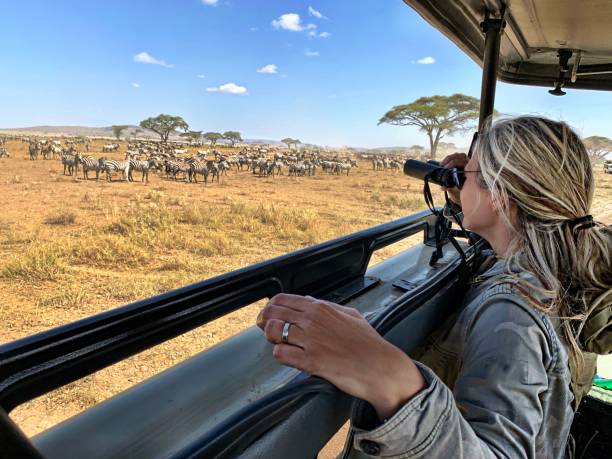
Discover expert Tarangire photography tips with Nabak Safaris and Tours. Learn how to capture stunning wildlife shots, master safari camera techniques, lighting, and composition for unforgettable photography in Tarangire National Park, Tanzania.
Introduction
Tarangire National Park is one of Tanzania’s most visually striking safari destinations, offering endless opportunities for wildlife and landscape photography. From massive elephant herds walking under ancient baobab trees to golden savannah plains filled with giraffes and zebras, every moment presents a perfect frame. Understanding Tarangire photography tips is essential for anyone planning to capture professional-quality safari images during their visit.
At Nabak Safaris and Tours, we guide photographers of all levels on how to maximize their safari experience through practical and field-tested Tarangire photography tips. Whether you are using a smartphone or a professional DSLR camera, Tarangire provides a natural studio with constantly changing light, movement, and wildlife behavior.
Unlike controlled photography environments, safari photography requires patience, timing, and awareness. That is why learning Tarangire photography tips before your trip significantly improves your chances of capturing stunning and meaningful images.
Why Tarangire is a Photographer’s Paradise
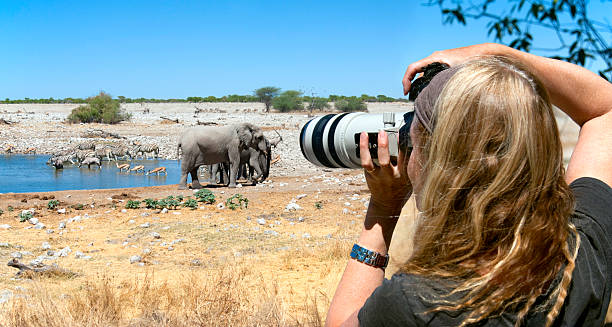
One of the reasons photographers actively seek Tarangire photography tips is because the park offers a unique combination of wildlife density and scenic diversity. The landscape is dominated by iconic baobab trees, seasonal rivers, and open grasslands that create dramatic natural compositions.
The presence of large elephant herds is another major attraction. These animals often move in groups, creating powerful storytelling opportunities for photographers. Many professional guides emphasize Tarangire photography tips because elephants are not only easy to find but also highly photogenic in different lighting conditions.
Additionally, Tarangire experiences strong golden-hour lighting during early mornings and late afternoons, which enhances color contrast and depth in images. This is one of the most important Tarangire photography tips for capturing cinematic safari shots.
Understanding Light in Tarangire Photography
Lighting is the foundation of every great safari photograph. One of the most important Tarangire photography tips is learning how to use natural light effectively.
Morning light in Tarangire is soft, warm, and ideal for capturing detailed wildlife portraits. Animals are also more active during this time, increasing the chances of dynamic shots. Afternoon light, on the other hand, provides longer shadows and golden tones that enhance landscape photography.
Midday light can be harsh, but with proper positioning and exposure settings, photographers can still achieve strong results. A key Tarangire photography tips principle is to always position yourself so that light falls at an angle rather than directly behind or in front of your subject.
At Nabak Safaris and Tours, guides often adjust vehicle positioning to help photographers take advantage of the best available light.
Camera Settings and Equipment Basics
Understanding your equipment is essential for applying effective Tarangire photography tips. While professional cameras offer greater flexibility, even smartphones can produce excellent results when used correctly.
For DSLR or mirrorless users, a fast shutter speed is recommended when photographing moving animals such as elephants or antelopes. This helps freeze motion and avoid blur. One of the core Tarangire photography tips is to always be ready for sudden wildlife movement.
A zoom lens (70–300mm or higher) is highly recommended for safari photography, as it allows safe distance shooting without disturbing animals. Wide-angle lenses are ideal for capturing landscapes and large herds.
Keeping your camera settings adjusted for changing light conditions is another important Tarangire photography tips practice that improves consistency in your shots.
Composition Techniques for Safari Photography
Composition plays a major role in turning ordinary images into professional-quality photographs. One of the most valuable Tarangire photography tips is applying the rule of thirds when framing wildlife subjects.
Placing animals slightly off-center creates more balanced and visually appealing images. Including environmental elements such as trees, dust trails, or mountains adds storytelling depth to your photos.
Another important Tarangire photography tips strategy is using foreground and background layers to create depth. For example, photographing elephants with baobab trees in the background adds scale and context to the image.
At Nabak Safaris and Tours, guides help photographers position themselves for optimal composition opportunities during game drives.
Behavioral Awareness for Better Shots
Understanding animal behavior is one of the most overlooked but powerful Tarangire photography tips. Wildlife behavior directly influences timing, positioning, and shot selection.
For example, elephants often move in predictable family groups, making it easier to anticipate movement direction. Lions may rest for long periods before sudden activity bursts, requiring patience from photographers.
One of the key Tarangire photography tips is to observe before shooting. Taking time to study animal behavior often results in better, more meaningful images.
Ethical Wildlife Photography Practices
Ethical behavior is a core principle of all professional Tarangire photography tips. Photographers must always prioritize animal welfare over image capture.
This means maintaining a safe distance, avoiding flash photography on wildlife, and never disturbing animal behavior for the sake of a shot. Responsible photography ensures that Tarangire remains a sustainable destination for future generations.
Nabak Safaris and Tours strongly emphasizes ethical Tarangire photography tips as part of every safari experience, ensuring that guests contribute positively to conservation efforts.
Tarangire National Park offers some of the most rewarding wildlife photography opportunities in Africa. However, achieving professional results requires preparation, awareness, and proper technique.
By applying essential Tarangire photography tips, photographers can dramatically improve their safari images while respecting wildlife and natural environments. At Nabak Safaris and Tours, we ensure that every guest receives practical guidance to enhance their photography experience in the field.
This foundation sets the stage for deeper techniques, gear optimization, and advanced shooting strategies in the next sections, all focused on maximizing your results in the field.
ADVANCED CAMERA TECHNIQUES, WILDLIFE ACTION SHOTS & COMPOSITION MASTERY FOR TARANGIRE PHOTOGRAPHY TIPS
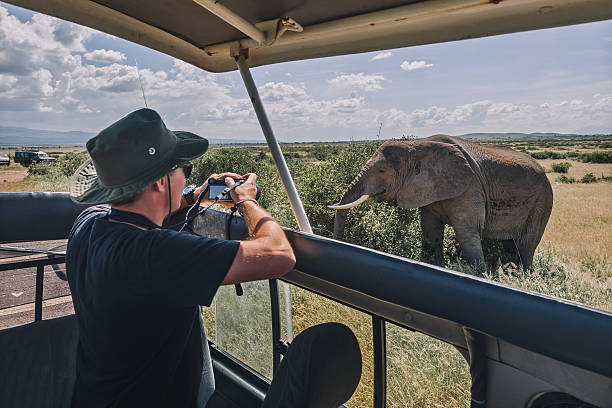
Once you understand the basics of safari photography, the next step in mastering Tarangire photography tips is learning how to handle real-time wildlife situations with confidence and precision. Tarangire National Park is not a controlled environment, which means animals move unpredictably, lighting changes rapidly, and opportunities appear for only a few seconds.
At Nabak Safaris and Tours, we train guests and photography enthusiasts to go beyond simple snapshots and develop a deeper visual storytelling approach. This section focuses on advanced field techniques that transform ordinary safari photos into professional-level images. Mastering these Tarangire photography tips requires patience, timing, and strong technical awareness in dynamic conditions.
Mastering Shutter Speed for Wildlife Motion
One of the most critical Tarangire photography tips is understanding shutter speed control. Wildlife in Tarangire is constantly moving—whether it’s elephants walking in herds, giraffes feeding, or predators stalking prey.
A fast shutter speed (1/1000 or higher) is essential for freezing motion, especially during action scenes such as running antelopes or dust-filled elephant crossings. Slower shutter speeds can be used creatively for artistic motion blur, but they require stable positioning and experience.
A key principle in Tarangire photography tips is anticipating movement before it happens. Instead of reacting after an animal moves, experienced photographers pre-focus and wait for the perfect moment to trigger the shot.
Focus Techniques for Sharp Wildlife Images
Sharp focus is what separates amateur safari images from professional wildlife photography. One of the most important Tarangire photography tips is using continuous autofocus (AI Servo or AF-C mode) when shooting moving subjects.
Animals rarely stay still, especially in Tarangire where herds move frequently across open landscapes. Continuous focus tracking allows your camera to adjust in real time, ensuring that your subject remains sharp even during movement.
Another advanced Tarangire photography tips technique is focus-point selection. Instead of using automatic full-area focus, professionals select a single or small group of focus points to maintain control over composition and sharpness.
Mastering Light Direction and Exposure Control
Lighting in Tarangire changes quickly depending on time of day, weather, and dust conditions. One of the most advanced Tarangire photography tips is learning how to manually adjust exposure compensation to match real-world lighting conditions.
During early morning or late afternoon, warm golden light enhances textures and colors. However, midday light can create harsh shadows that require careful exposure balancing.
Backlighting is another powerful creative tool. Positioning the sun behind animals can create dramatic silhouettes, a technique widely used in professional safari photography. This is one of the most visually striking Tarangire photography tips when done correctly.
Capturing Wildlife Action Moments
Action photography is where Tarangire truly shines. One of the most valuable Tarangire photography tips is learning how to predict animal behavior to capture peak moments.
For example, elephants often engage in dust bathing or water spraying, while lions may suddenly shift from resting to short bursts of movement. These transitions last only seconds, so preparation is essential.
Continuous shooting mode (burst mode) is highly recommended for capturing action sequences. However, selecting the right moment afterward is equally important. A core Tarangire photography tips strategy is to prioritize storytelling over quantity—choose images that show emotion, interaction, or behavior.
Advanced Composition Techniques in the Field
Composition becomes even more important in fast-moving safari environments. One of the advanced Tarangire photography tips is using natural framing elements such as trees, branches, or dust clouds to enhance subject focus.
Baobab trees, which are iconic in Tarangire, can be used as strong compositional anchors. Positioning wildlife against these massive trees adds scale and dramatic effect.
Another powerful technique is layering. Including foreground, subject, and background in a single frame creates depth and realism. This is one of the most professional-level Tarangire photography tips used in wildlife storytelling.
Working with Safari Vehicle Limitations
Unlike studio or walking safaris, photography in Tarangire is done from a vehicle. One of the practical Tarangire photography tips is learning how to stabilize your camera inside a moving vehicle.
Using bean bags or resting your lens on vehicle edges helps reduce vibration and improves sharpness. Avoid leaning unsupported, as movement can ruin focus accuracy.
Another important Tarangire photography tips approach is communicating with your safari guide. Professional guides at Nabak Safaris and Tours often adjust positioning based on light direction and animal movement, giving photographers better shooting angles.
Capturing Emotional Wildlife Behavior
Great wildlife photography is not just about clarity—it is about emotion. One of the most powerful Tarangire photography tips is focusing on behavioral storytelling.
Images of elephant families interacting, lions resting in groups, or giraffes gently feeding communicate emotion and connection. These moments often have more impact than action shots alone.
Patience is essential. Waiting for natural interactions is one of the most important Tarangire photography tips that separates casual photography from professional safari storytelling.
Managing Dust, Heat, and Environmental Challenges
Tarangire’s environment can be challenging for photography equipment. Dust is a constant presence, especially during dry seasons. One of the essential Tarangire photography tips is protecting your gear using lens covers and regular cleaning.
Heat can also affect battery performance, so carrying spare batteries is highly recommended. Changing lenses should be done carefully to avoid dust contamination.
Professional photographers always prepare for environmental challenges, and this is a key part of advanced Tarangire photography tips in real field conditions.
Ethical Field Photography Practices
Even at an advanced level, ethics remain central to Tarangire photography tips. Photographers must avoid disturbing wildlife behavior, especially during sensitive moments such as hunting, feeding, or caring for young animals.
Respecting distance rules ensures that animals behave naturally, resulting in more authentic images. Ethical photography is not only responsible but also produces higher-quality storytelling content.
At Nabak Safaris and Tours, we consistently reinforce ethical Tarangire photography tips to ensure sustainable and respectful wildlife tourism.
Advanced wildlife photography in Tarangire requires a combination of technical skill, field awareness, and patience. By mastering shutter speed, focus control, composition, and behavioral observation, photographers can significantly improve their safari results.
Applying these Tarangire photography tips in real-time situations allows you to capture powerful, emotional, and professional-quality wildlife images. At Nabak Safaris and Tours, we ensure that every guest has the opportunity to develop these skills while experiencing one of Africa’s most photogenic national parks.
POST-PROCESSING WORKFLOW, STORYTELLING, GEAR STRATEGY & FIELD OPTIMIZATION FOR TARANGIRE PHOTOGRAPHY TIPS
After capturing images in the field, the real transformation of wildlife photography begins. Many travelers focus only on shooting, but professionals understand that editing, storytelling, and workflow organization are equally important parts of Tarangire photography tips. In Tarangire National Park, where lighting is dramatic and wildlife behavior is unpredictable, post-processing helps refine images into powerful visual stories.
At Nabak Safaris and Tours, we emphasize that a complete photography experience does not end with the safari vehicle. Instead, it continues through careful selection, editing, and presentation of images that reflect the true beauty of the ecosystem. This section explores advanced workflow strategies, gear optimization, and storytelling techniques that elevate your Tarangire photography tips to a professional level.
Building a Professional Photo Selection Workflow
One of the most overlooked Tarangire photography tips is learning how to select the best images from hundreds of shots taken during a safari. Wildlife photography often produces large volumes of similar images, especially when using burst mode.
A structured workflow begins with sorting images into categories such as wildlife portraits, action shots, landscapes, and behavioral sequences. This allows photographers to identify strong storytelling images more efficiently.
A key Tarangire photography tips principle is to prioritize emotional impact over technical perfection. An image with slight imperfections but strong storytelling value often performs better than a perfectly sharp but lifeless shot.
Editing Workflow for Safari Images
Post-processing is where raw safari images are refined into professional-quality visuals. One of the essential Tarangire photography tips is maintaining natural tones while enhancing clarity and contrast.
Editing should focus on exposure correction, white balance adjustment, and selective sharpening. Over-editing should be avoided because it can reduce the authenticity of wildlife scenes.
A professional Tarangire photography tips approach involves enhancing dust atmosphere, golden light tones, and natural shadows without altering the true behavior of animals or the environment.
Color Grading for Tarangire Landscapes
Color grading plays a major role in safari storytelling. One of the advanced Tarangire photography tips is using warm tones to enhance the golden savannah aesthetic that Tarangire is famous for.
Earthy tones such as browns, golds, and soft greens help reflect the natural environment. Cool tones can be used sparingly to emphasize early morning or shaded scenes.
A balanced color palette ensures that your images remain realistic while still visually powerful, which is a core principle in Tarangire photography tips for professional output.
Wildlife Storytelling Through Image Sequencing
Photography is not just about single images—it is about telling a story. One of the most powerful Tarangire photography tips is creating visual sequences that show behavior progression.
For example, an elephant sequence might include walking, interacting, and dust bathing. A lion sequence might show resting, observing, and moving.
By arranging images in a logical order, photographers create narrative depth. This storytelling approach is one of the most advanced Tarangire photography tips used in professional wildlife portfolios.
Gear Optimization for Safari Efficiency
Having the right gear is important, but knowing how to use it efficiently is even more critical. One of the practical Tarangire photography tips is minimizing unnecessary lens changes during game drives.
Using two camera bodies or a versatile zoom lens reduces downtime and increases shooting opportunities. Dust protection is also essential due to Tarangire’s dry environment.
A strong Tarangire photography tips strategy is preparing gear before entering the park, ensuring batteries are charged, memory cards are formatted, and settings are pre-configured for wildlife conditions.
Comparison Table: Camera Gear for Tarangire Photography
| Gear Type | Best Use | Advantage | Limitation |
|---|---|---|---|
| Telephoto Lens (70–300mm or 100–400mm) | Wildlife close-ups | Captures distant animals clearly | Heavy and expensive |
| Wide-Angle Lens | Landscapes & herds | Shows environment context | Not ideal for distant wildlife |
| Mirrorless Camera | Fast action shots | Lightweight & fast autofocus | Battery drains quickly |
| DSLR Camera | All-round safari use | Reliable performance | Heavier than mirrorless |
| Smartphone (Advanced Models) | Casual photography | Easy & portable | Limited zoom capability |
This comparison supports better decision-making when applying Tarangire photography tips in real safari conditions.
Managing Storage and Backup in the Field
One of the most technical Tarangire photography tips is managing storage efficiently during long game drives. Wildlife photography produces large data volumes, especially in burst mode.
Carrying multiple memory cards and portable backup devices ensures that no images are lost during the safari. Photographers should also organize files daily to avoid confusion later.
A disciplined backup routine is a professional-level Tarangire photography tips practice that protects valuable safari memories.
Enhancing Creativity in Safari Photography
Creativity is what separates average images from iconic wildlife shots. One of the advanced Tarangire photography tips is experimenting with angles, perspectives, and framing techniques.
Low-angle shots can make animals appear more powerful, while wide environmental shots emphasize scale and habitat. Using negative space can also enhance visual storytelling.
Creative experimentation is encouraged in Tarangire photography tips, as Tarangire’s landscapes provide endless opportunities for artistic expression.
Working with Safari Guides for Better Shots
Collaboration with safari guides is a key but often underestimated part of Tarangire photography tips. Experienced guides understand animal behavior and can position vehicles for optimal lighting and angles.
Communicating clearly with guides about photographic goals improves results significantly. Whether focusing on action shots or landscapes, guide support enhances timing and positioning.
At Nabak Safaris and Tours, guides are trained to support photography-focused safaris, making this an essential part of Tarangire photography tips execution.
Ethical Editing and Responsible Presentation
Even in post-processing, ethics remain important. One of the core Tarangire photography tips is maintaining authenticity in wildlife representation.
Images should not be manipulated in ways that misrepresent animal behavior or environmental conditions. Ethical editing ensures credibility and supports conservation awareness.
Responsible storytelling is a defining principle of professional Tarangire photography tips and contributes to long-term wildlife appreciation.
Post-processing, storytelling, gear optimization, and workflow management are essential components of advanced wildlife photography. In Tarangire, where conditions change rapidly and opportunities are fleeting, structured workflow ensures that every captured moment is maximized.
By applying these Tarangire photography tips, photographers can transform raw safari images into powerful visual stories that reflect both artistic skill and respect for nature. At Nabak Safaris and Tours, we support photographers in developing not just field skills, but complete creative workflows that elevate their safari experience.
About the Author
