
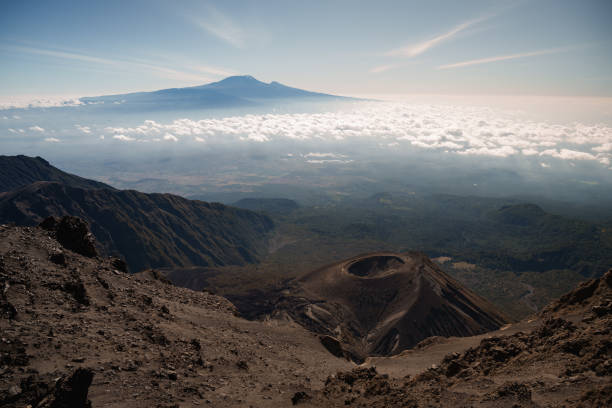
Explore Mount Meru flora and fauna in Arusha National Park, Tanzania, including wildlife species, plant ecosystems, and biodiversity experiences with Nabak Safaris and Tours.
Introduction
Understanding Mount Meru flora and fauna is essential for anyone planning to explore one of Tanzania’s most biologically rich mountain ecosystems. Located within Arusha National Park, Mount Meru is not only a trekking destination but also a living ecosystem filled with diverse plant species and abundant wildlife.
Unlike many mountains that focus only on hiking experiences, Mount Meru offers a unique combination of ecological zones where forests, grasslands, and alpine vegetation coexist with a wide range of animal species. This makes Mount Meru flora and fauna one of the most interesting topics for nature lovers, researchers, and safari travelers.
This guide by Nabak Safaris and Tours provides a complete introduction to the biodiversity of Mount Meru, explaining its ecosystems, plant life, and animal species in detail.
Quick Summary
- Mount Meru has rich biodiversity across multiple ecological zones
- Home to forests, grasslands, and alpine vegetation
- Wildlife includes mammals, birds, and primates
- Located inside Arusha National Park
- Best explored with guided tours
Why Mount Meru Flora and Fauna Are Unique
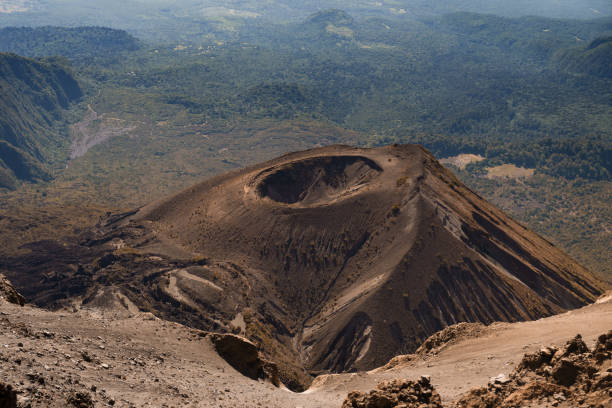
Mount meru crater in arusha national park, tanzania, seen from socialist peak, showcases volcanic formations and vast african wilderness
The uniqueness of Mount Meru flora and fauna comes from its geographical position and altitude variation.
1. Multiple Ecological Zones
Mount Meru contains several distinct zones:
- Lowland savannah
- Montane forest
- Moorland vegetation
- Alpine desert
Each zone supports different species of plants and animals.
2. Protected Ecosystem
Because the mountain is inside a national park, biodiversity is well preserved under strict conservation rules.
3. Wildlife Accessibility
Unlike many mountains, wildlife is easily observable in lower zones, making it ideal for eco-tourism.
Main Ecological Zones of Mount Meru Flora and Fauna
Understanding Mount Meru flora and fauna requires exploring its ecological layers.
1. Lowland Savannah Zone
Overview
This is the lowest part of Mount Meru.
Flora
- Grasslands
- Acacia trees
- Shrubs
Fauna
- Giraffes
- Zebras
- Buffalo
- Warthogs
Experience
This zone provides the first introduction to Mount Meru flora and fauna through open wildlife viewing.
2. Montane Forest Zone
Overview
Dense rainforest dominates this section.
Flora
- Giant fig trees
- Ferns
- Moss-covered trees
Fauna
- Colobus monkeys
- Blue monkeys
- Forest birds
Experience
This is one of the richest biodiversity zones in Mount Meru flora and fauna.
3. Moorland Zone
Overview
Transition zone between forest and alpine areas.
Flora
- Heather plants
- Shrubs
- Hardy grasses
Fauna
- Occasional birds of prey
- Small mammals
Experience
Open landscapes and unique vegetation dominate this zone.
4. Alpine Desert Zone
Overview
Highest ecological zone near summit.
Flora
- Sparse vegetation
- Moss and lichens
Fauna
- Very limited wildlife
- Occasional bird sightings
Experience
Extreme conditions with minimal life forms.
Comparison Table: Ecological Zones
| Zone | Vegetation Type | Wildlife Level | Experience Type |
|---|---|---|---|
| Savannah | Grassland | High | Safari feel |
| Forest | Dense rainforest | Very high | Jungle trekking |
| Moorland | Shrubs/heather | Medium | Scenic hiking |
| Alpine | Sparse vegetation | Low | Summit zone |
Expert Insight from Nabak Safaris and Tours
Experts highlight that Mount Meru flora and fauna is one of the most diverse ecosystems in Tanzania due to its altitude range and conservation status.
Key insights:
- Biodiversity changes rapidly with altitude
- Forest zone has highest wildlife density
- Conservation efforts protect endangered species
- Guided tours improve wildlife spotting experience
Field experience shows that travelers are often surprised by how quickly ecosystems change within a single climb.
Bullet Point Highlights
- Multiple ecological zones on one mountain
- High wildlife density in forest areas
- Unique plant species at different altitudes
- Protected national park ecosystem
- Ideal for nature and safari lovers
This section shows that Mount Meru flora and fauna represents one of Tanzania’s richest natural ecosystems. From savannah wildlife to dense forests and alpine zones, the mountain offers a complete ecological journey within a single landscape.
With expert guidance from Nabak Safaris and Tours, visitors can safely explore and fully appreciate this biodiversity-rich environment.
Detailed Wildlife Species, Plant Diversity & Ecosystem Interactions
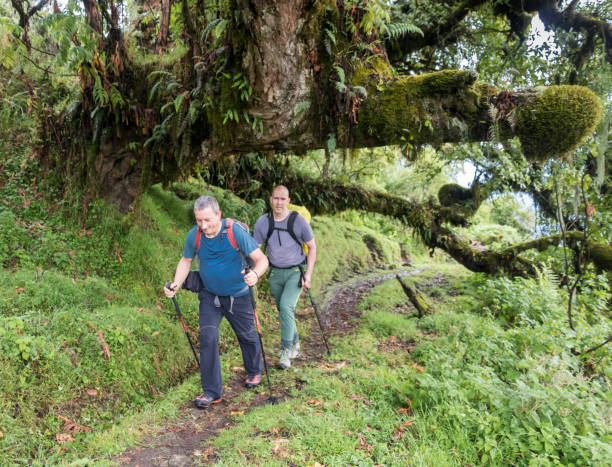
Two male hikers are walking on a narrow footpath passing by a huge trunk within the lushy green rainforest at the foot of Mount Meru (4.562 mt,, 14.967 ft.) in Tanzania. The area is famous for hiking and to get acclimated for further hikes on Mount Kilimanjaro.
Canon EOS 760D, 1/200, f/4, 18 mm.
To fully understand Mount Meru flora and fauna, it is important to go beyond general ecosystem zones and explore the specific species that live within them. Inside Mount Meru and the surrounding Arusha National Park, biodiversity is not only rich but also highly structured according to altitude, climate, and vegetation type.
This section by Nabak Safaris and Tours provides a deeply detailed breakdown of wildlife species, plant diversity, and how different organisms interact within the Mount Meru flora and fauna ecosystem.
1. Mammals of Mount Meru Flora and Fauna
Mammals are one of the most visible parts of Mount Meru flora and fauna, especially in the lower zones.
A. Large Herbivores
Giraffes
- Common in savannah zones
- Feed on acacia trees
- Often seen near forest edges
Zebras
- Move in herds
- Graze in open grasslands
- Important part of ecosystem balance
Buffaloes
- Found in forest and savannah transition zones
- Strong and protective species
- Often move in groups
B. Smaller Mammals
Warthogs
- Common in open areas
- Feed on roots and grass
Antelopes
- Agile and fast
- Adapted to both forest and open areas
Ecological Role
These mammals help:
- Maintain vegetation balance
- Support predator-prey cycles
- Shape plant distribution in Mount Meru flora and fauna
2. Primates and Forest Wildlife
The forest zone is one of the richest parts of Mount Meru flora and fauna.
A. Colobus Monkeys
- Black and white fur
- Live in forest canopy
- Feed on leaves
B. Blue Monkeys
- Highly active and social
- Often seen in groups
- Adaptable to forest edges
C. Other Primates
- Occasional baboon sightings
- Mixed troop movements in lower zones
Ecological Importance
Primates play a key role in:
- Seed dispersal
- Forest regeneration
- Maintaining biodiversity balance
3. Birdlife Diversity
Birds are one of the most vibrant parts of Mount Meru flora and fauna.
Forest Birds
- Turacos
- Hornbills
- Sunbirds
Savannah Birds
- Eagles
- Vultures
- Secretary birds
Why Birds Matter
Birds contribute to:
- Pollination
- Seed dispersal
- Pest control
4. Plant Life and Vegetation Zones
Plants form the foundation of Mount Meru flora and fauna.
A. Lowland Vegetation
- Acacia trees
- Grasslands
- Thorny shrubs
B. Forest Vegetation
- Giant fig trees
- Ferns
- Moss-covered trunks
- Dense canopy layers
C. Moorland Vegetation
- Heather plants
- Shrubs
- Hardy grasses
D. Alpine Vegetation
- Moss
- Lichens
- Sparse hardy plants
Ecological Role of Plants
Plants support:
- Oxygen production
- Wildlife habitat
- Soil stabilization
5. Ecosystem Interaction in Mount Meru Flora and Fauna
The real strength of Mount Meru flora and fauna is in how species interact.
A. Predator-Prey Balance
- Herbivores feed on vegetation
- Carnivores (rare but present regionally) maintain balance
B. Seed Dispersal System
- Monkeys and birds spread seeds
- Herbivores help plant regeneration
C. Forest Regeneration Cycle
- Old plants die and decompose
- New vegetation grows rapidly in forest zones
Comparison Table: Species Distribution
| Zone | Key Wildlife | Vegetation Type | Biodiversity Level |
|---|---|---|---|
| Savannah | Giraffes, zebras | Grasslands | High |
| Forest | Monkeys, birds | Dense rainforest | Very High |
| Moorland | Birds, small mammals | Shrubs/heather | Medium |
| Alpine | Minimal wildlife | Moss/lichens | Low |
Expert Insight from Nabak Safaris and Tours
Experts confirm that Mount Meru flora and fauna is a highly interconnected ecosystem where even small species play a big ecological role.
Key insights:
- Forest zone has highest biodiversity concentration
- Wildlife distribution depends on altitude
- Plant diversity supports all animal life
- Conservation ensures long-term ecosystem stability
Field observations show that guided tours significantly improve wildlife spotting and ecological understanding.
Bullet Point Highlights
- Mammals dominate savannah zones
- Primates are key forest species
- Birds are widespread across all zones
- Vegetation changes with altitude
- Ecosystem is highly interconnected
This section shows that Mount Meru flora and fauna is not just about individual species, but about a deeply connected ecosystem. From giraffes in the savannah to monkeys in the forest and moss in alpine zones, every element plays a role in maintaining balance.
With guidance from Nabak Safaris and Tours, travelers can fully appreciate the richness and complexity of this natural environment.
Conservation, Climate Impact, Ecological Importance & Human Interaction
Understanding Mount Meru flora and fauna is not only about identifying animals and plants, but also about recognizing the forces that protect, shape, and sometimes threaten this delicate ecosystem. Within Mount Meru and the surrounding Arusha National Park, biodiversity exists because of long-term conservation efforts, climate conditions, and controlled human interaction.
This section by Nabak Safaris and Tours provides a deeply detailed explanation of conservation systems, environmental challenges, climate influence, and the importance of protecting Mount Meru flora and fauna for future generations.
1. Conservation Efforts Protecting Mount Meru Flora and Fauna
Conservation is the foundation of Mount Meru flora and fauna survival.
A. National Park Protection System
Mount Meru is fully protected under national park regulations, meaning:
- No unauthorized hunting
- Controlled tourism activities
- Strict environmental laws
B. Ranger Patrol Systems
Rangers play a key role in protecting biodiversity:
- Monitoring wildlife movement
- Preventing illegal activities
- Guiding trekking routes
C. Habitat Preservation
Conservation efforts focus on:
- Protecting forest zones
- Maintaining water sources
- Preserving vegetation layers
Why Conservation Matters
Without protection, the balance of Mount Meru flora and fauna would be disrupted, affecting both wildlife and plant ecosystems.
2. Climate Influence on Mount Meru Flora and Fauna
Climate is one of the strongest factors shaping Mount Meru flora and fauna.
A. Rainfall Patterns
- Heavy rainfall supports dense forests
- Seasonal rains influence plant growth
- Water availability determines wildlife distribution
B. Temperature Variation
As altitude increases:
- Temperatures drop significantly
- Vegetation becomes sparse
- Wildlife becomes less frequent
C. Seasonal Changes
- Wet season: lush vegetation, high animal activity
- Dry season: easier trekking, reduced vegetation density
Climate Importance
Climate directly controls how ecosystems within Mount Meru flora and fauna develop and survive.
3. Human Interaction and Tourism Impact
Human activity has both positive and controlled impacts on Mount Meru flora and fauna.
A. Eco-Tourism Activities
Tourism contributes by:
- Funding conservation programs
- Supporting local communities
- Increasing awareness of biodiversity
B. Controlled Trekking Routes
All trekking activities are regulated:
- Fixed routes reduce environmental damage
- Guided tours ensure responsible movement
- Limited group sizes protect habitats
C. Local Community Involvement
Communities near the park benefit through:
- Employment opportunities
- Cultural tourism programs
- Conservation education
Balance Between Tourism and Nature
Sustainable tourism ensures that Mount Meru flora and fauna remains protected while still accessible.
4. Environmental Threats to Mount Meru Flora and Fauna
Despite protection, some challenges still exist.
A. Climate Change Effects
- Altered rainfall patterns
- Shifting vegetation zones
- Habitat stress for wildlife
B. Human Pressure Outside Park
- Agricultural expansion near borders
- Resource competition
- Potential habitat fragmentation
C. Invasive Species Risks
- Non-native plants can disrupt ecosystems
- Competition with native vegetation
Why Monitoring Is Important
Continuous monitoring ensures long-term survival of Mount Meru flora and fauna.
5. Ecological Importance of Mount Meru Flora and Fauna
The ecosystem provides major benefits beyond biodiversity.
A. Water Catchment Function
- Forests help store and release water
- Supports surrounding communities
B. Climate Regulation
- Vegetation helps regulate local climate
- Maintains air quality
C. Biodiversity Reservoir
- Acts as a genetic reserve for species
- Supports ecological research
Comparison Table: Positive vs Threat Factors
| Factor Type | Positive Impact | Negative Impact |
|---|---|---|
| Conservation | Protects biodiversity | Requires resources |
| Tourism | Funds protection | Can cause disturbance if unmanaged |
| Climate | Supports ecosystem cycles | Causes stress when extreme |
| Human Activity | Economic support | Habitat pressure |
Expert Insight from Nabak Safaris and Tours
Experts emphasize that the long-term survival of Mount Meru flora and fauna depends on balancing conservation, tourism, and environmental awareness.
Key insights:
- Protected status is essential for biodiversity survival
- Sustainable tourism reduces ecological impact
- Climate monitoring helps predict ecosystem changes
- Community involvement strengthens conservation success
Field experience shows that well-managed tourism can actually enhance conservation efforts when properly controlled.
Bullet Point Highlights
- Fully protected national park ecosystem
- Climate strongly shapes biodiversity
- Tourism supports conservation funding
- Human activity is carefully regulated
- Environmental threats require monitoring
This section highlights that Mount Meru flora and fauna is a delicate balance between nature, climate, and human activity. Conservation efforts, guided tourism, and environmental awareness are essential to protect this unique ecosystem.
With support from Nabak Safaris and Tours, visitors can experience Mount Meru responsibly while contributing to its long-term preservation.
Final Summary, FAQs, Expert Insights & Complete Biodiversity Guide
After exploring ecosystems, wildlife species, plant diversity, conservation efforts, and environmental challenges, it is clear that Mount Meru flora and fauna represents one of the most diverse and well-protected natural systems in Tanzania.
Located within Arusha National Park, Mount Meru is not only a trekking destination but also a complete ecological laboratory where forests, savannahs, and alpine zones coexist in harmony.
This final section by Nabak Safaris and Tours brings everything together into a complete expert guide, including FAQs, summary insights, comparison tables, and practical conservation understanding.
Final Expert Summary
The overall understanding of Mount Meru flora and fauna can be summarized in three core ideas:
1. Ecosystem Diversity
Mount Meru contains multiple ecological zones within a single mountain:
- Savannah grasslands
- Dense montane forests
- Moorland vegetation
- Alpine desert zones
Each zone supports different species of plants and animals.
2. High Biodiversity Concentration
The mountain supports:
- Large mammals
- Primates
- Birds
- Unique plant species
This makes it one of the richest ecosystems in East Africa.
3. Strong Conservation Protection
Due to national park status:
- Wildlife is protected
- Vegetation is preserved
- Human impact is controlled
Why Mount Meru Flora and Fauna Is Globally Important
The ecological importance of Mount Meru flora and fauna extends beyond Tanzania.
A. Biodiversity Hotspot
It serves as a habitat for multiple species across different ecological zones.
B. Water Catchment System
Forests help regulate water flow to surrounding communities.
C. Climate Stability Role
Vegetation helps regulate temperature and rainfall patterns.
D. Research Importance
Scientists use the ecosystem to study:
- Climate change effects
- Wildlife adaptation
- Plant succession patterns
Comparison Table: Ecosystem Value
| Category | Importance Level | Description |
|---|---|---|
| Biodiversity | Very High | Multiple species coexist |
| Conservation Value | High | Protected national park |
| Tourism Value | High | Eco-tourism destination |
| Scientific Value | Very High | Research ecosystem |
Extended FAQs
1. What is Mount Meru flora and fauna?
It refers to the plant and animal life found in and around Mount Meru within Arusha National Park, including forests, savannah wildlife, and alpine vegetation.
2. What animals can I see in Mount Meru flora and fauna?
Common animals include giraffes, zebras, buffalo, monkeys, and various bird species depending on altitude.
3. Are the ecosystems different at each altitude?
Yes. Lowlands have savannah wildlife, mid zones have forests, and high zones have alpine vegetation.
4. Is Mount Meru flora and fauna protected?
Yes, it is fully protected under Arusha National Park regulations.
5. Can tourists explore the biodiversity safely?
Yes, but only through guided tours to ensure safety and environmental protection.
Expert Insight from Nabak Safaris and Tours
Experts confirm that Mount Meru flora and fauna is one of the best examples of vertical biodiversity in Africa.
Key insights:
- Biodiversity changes dramatically with altitude
- Forest zones have highest species concentration
- Conservation ensures long-term ecological stability
- Guided tours improve wildlife and plant observation
Field experience shows that visitors often underestimate how quickly ecosystems change within a single trekking route.
Bullet Point Summary
- Multiple ecosystems in one mountain
- High wildlife diversity in lower zones
- Unique plant life at different altitudes
- Strong conservation protection
- Ideal for eco-tourism and research
Final Conservation Reminder
To protect Mount Meru flora and fauna, visitors should:
- Follow park rules strictly
- Avoid disturbing wildlife
- Stay on designated trails
- Support eco-tourism practices
- Respect natural habitats
External Resource
Official park information:
https://www.tanzaniaparks.go.tz
Final Conclusion
Mount Meru flora and fauna represents a rare and valuable ecological system where wildlife, plants, and climate interact in perfect balance. From savannah plains to alpine heights, the mountain offers a complete biodiversity experience within a single protected landscape.
With professional guidance from Nabak Safaris and Tours, travelers can explore this ecosystem responsibly while contributing to its long-term conservation.
This is not just a destination—it is a living natural heritage that must be protected and appreciated.
Ready to explore Tanzania’s biodiversity?
👉 Book your guided experience with Nabak Safaris and Tours and discover the full beauty of Mount Meru flora and fauna through safe, expert-led eco-adventures.
About the Author
