
Discover Serengeti bird watching with Nabak Safaris and Tours. Explore top birding spots, best seasons, species diversity, and expert safari tips in Tanzania.
QUICK SUMMARY
This Serengeti bird watching guide introduces one of Africa’s most diverse birding destinations. With over 500 bird species, the Serengeti offers exceptional opportunities for both beginner and professional bird watchers. This guide by Nabak Safaris and Tours explains bird diversity, habitats, and why Serengeti is a top global birding location.
WHY SERENGETI IS A BIRD WATCHING PARADISE
Serengeti National Park is globally known for the Great Migration, but it is equally one of Africa’s top birding destinations. A complete Serengeti bird watching guide must highlight that this ecosystem supports more than 500 recorded bird species, making it a paradise for bird lovers.
From large raptors soaring across open skies to colorful small birds hidden in acacia trees, Serengeti offers unmatched diversity. This variety is due to its unique combination of habitats, including grasslands, woodlands, rivers, and wetlands.
At Nabak Safaris and Tours, we design birding safaris that allow travelers to explore these ecosystems in detail, ensuring a complete Serengeti bird watching experience.
WHAT MAKES SERENGETI UNIQUE FOR BIRD WATCHING
A strong Serengeti bird watching guide must explain why this destination stands out globally.
1. High Bird Species Diversity
Serengeti hosts:
- Resident bird species
- Migratory birds from Europe and Asia
- Rare and endemic species
2. Diverse Habitats
Different bird species thrive in different environments:
- Open plains → ground birds and ostriches
- Rivers and wetlands → water birds
- Woodlands → forest species
- Rocky outcrops → raptors
3. Year-Round Bird Watching
Unlike wildlife migration, bird watching in Serengeti is possible throughout the year, making it a consistent safari activity.
TYPES OF BIRDS FOUND IN SERENGETI
1. Birds of Prey (Raptors)
- Eagles
- Vultures
- Falcons
These are commonly seen in open skies and are a highlight of any Serengeti bird watching guide.
2. Ground Birds
- Ostriches
- Secretary birds
- Bustards
They are easy to spot due to Serengeti’s open landscape.
3. Water Birds
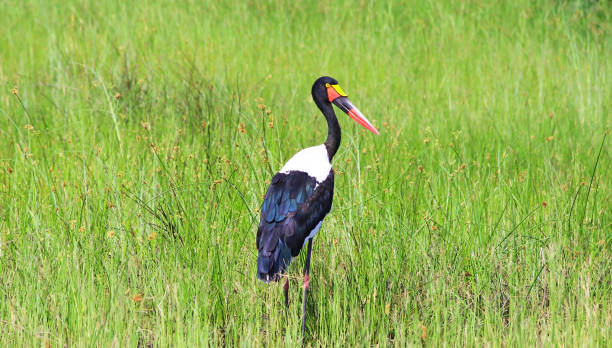
- Storks
- Herons
- Flamingos (seasonal)
Found near rivers and wetlands.
4. Colorful Forest Birds
- Bee-eaters
- Kingfishers
- Rollers
These species attract photographers and birding enthusiasts.
WHY SERENGETI BIRD WATCHING IS GROWING IN POPULARITY
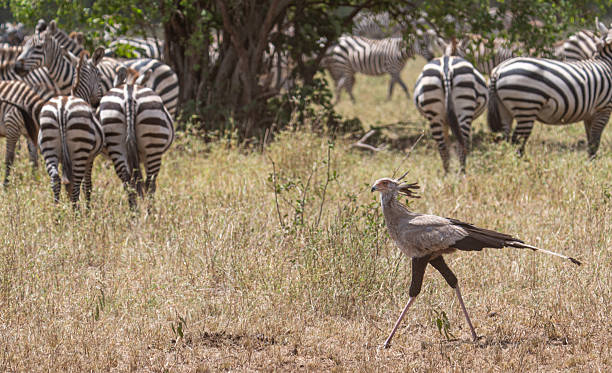
Wild secretary bird in the famous Serengeti National Park in Tanzania, Africa.
More travelers are discovering that Serengeti is not only about big animals.
Reasons for growing interest:
- Unique bird diversity
- Less crowded compared to wildlife safaris
- Ideal for photography
- Year-round availability
This makes the Serengeti bird watching guide an important resource for modern safari travelers.
ROLE OF NABAK SAFARIS AND TOURS IN BIRDING SAFARIS
At Nabak Safaris and Tours, we provide specialized birding experiences.
We offer:
- Expert birding guides
- Customized bird watching itineraries
- Access to top birding locations
- Flexible safari schedules
- Knowledge of seasonal bird movement
This ensures every Serengeti bird watching safari is productive and enjoyable.
COMMON MISCONCEPTIONS ABOUT BIRD WATCHING IN SERENGETI
Misconception 1: Serengeti is only for big animals
Reality: It is one of Africa’s best birding destinations.
Misconception 2: Bird watching is boring
Reality: Birding involves active exploration and discovery.
Misconception 3: You need to be an expert
Reality: Beginners can enjoy bird watching with proper guidance.
COMPARISON TABLE: SERENGETI VS OTHER BIRDING DESTINATIONS
| Feature | Serengeti | Other Parks |
|---|---|---|
| Species Diversity | Very High | Moderate |
| Year-Round Birding | Yes | Limited |
| Habitat Variety | Extensive | Moderate |
| Accessibility | Easy | Varies |
BEST BIRD WATCHING LOCATIONS, HABITATS & SEASONAL BIRDING STRATEGIES
This section of the Serengeti bird watching guide provides a deep exploration of the best birding locations, habitat types, and seasonal bird movement patterns across the park. It explains where to find specific bird species, how ecosystems influence bird distribution, and how to plan a successful birding safari with expert guidance from Nabak Safaris and Tours.
WHY LOCATION AND HABITAT DEFINE BIRD WATCHING SUCCESS
In any professional Serengeti bird watching guide, understanding location is essential. Birds are highly dependent on habitat, meaning each area of Serengeti offers a different birding experience.
Unlike large mammals that roam widely, birds are often tied to specific environments such as wetlands, grasslands, or woodlands. This makes habitat knowledge one of the most important tools for successful bird watching.
With Nabak Safaris and Tours, travelers are guided through carefully selected birding zones, ensuring that each Serengeti bird watching experience is rich, diverse, and productive.
MAJOR BIRDING HABITATS IN SERENGETI
1. Open Grasslands (Central and Southern Serengeti)
Open plains dominate much of Serengeti and are key areas in the Serengeti bird watching guide.
Common Bird Types:
- Ostriches
- Secretary birds
- Kori bustards
- Larks and pipits
Why It Matters:
- Easy visibility due to flat terrain
- Ideal for spotting ground-dwelling birds
- Excellent for photography
Grasslands provide some of the most accessible birding opportunities in Serengeti.
2. Riverine Forests and Wetlands
Rivers such as the Grumeti and Mara create fertile bird habitats.
Common Species:
- Kingfishers
- Herons
- Storks
- Fish eagles
Key Birding Advantage:
Water sources attract both resident and migratory birds, making wetlands a critical part of any Serengeti bird watching guide.
3. Acacia Woodlands
Woodland areas support a wide variety of colorful and small bird species.
Bird Highlights:
- Bee-eaters
- Rollers
- Hornbills
- Sunbirds
These habitats are essential for bird diversity and are a favorite among bird photographers.
4. Rocky Outcrops (Kopjes)
Kopjes are rocky formations scattered across Serengeti.
Bird Species Found Here:
- Raptors (eagles and hawks)
- Rock thrushes
- Chats
These elevated areas provide excellent vantage points for birds of prey.
TOP BIRD WATCHING LOCATIONS IN SERENGETI
Central Serengeti (Seronera Area)
This is one of the most important birding zones.
Why It Stands Out:
- Mix of grassland and woodland
- Year-round bird activity
- High species diversity
Central Serengeti is a key highlight in every Serengeti bird watching guide.
Southern Serengeti (Ndutu Region)
Known for open plains and seasonal wetlands.
Birding Benefits:
- High concentration of ground birds
- Seasonal water birds
- Migratory species during rainy season
Western Corridor (Grumeti Region)
Rich in river systems and vegetation.
Birding Highlights:
- Water birds
- Raptors
- Forest species
Northern Serengeti
Less crowded and highly rewarding for bird watchers.
Advantages:
- Unique species diversity
- Excellent river birding
- Fewer tourists
SEASONAL BIRD WATCHING PATTERNS
A complete Serengeti bird watching guide must include seasonal understanding.
Dry Season (June – October)
- Easier bird spotting due to sparse vegetation
- Concentration of birds near water sources
- Ideal for beginners
Wet Season (November – April)
- Arrival of migratory birds
- Breeding season for many species
- Bright plumage and active bird behavior
This is considered the best time for bird photography.
MIGRATORY BIRDS IN SERENGETI
Serengeti hosts migratory birds from:
- Europe
- Asia
- Other parts of Africa
These birds arrive during the wet season, adding diversity to the Serengeti bird watching experience.
COMPARISON TABLE: BEST TIME FOR BIRD WATCHING
| Season | Bird Activity | Best For |
|---|---|---|
| Dry Season | Concentrated birds | Easy viewing |
| Wet Season | High diversity | Photography & rare species |
ADVANCED BIRDING STRATEGIES
1. Early Morning Birding
Birds are most active during sunrise.
2. Slow Movement
Driving slowly increases chances of spotting smaller birds.
3. Listening Skills
Bird calls help identify hidden species.
4. Use of Binoculars
Essential for detailed observation.
5. Habitat Targeting
Focus on specific environments for specific birds.
These strategies are key to mastering the Serengeti bird watching guide.
ROLE OF NABAK SAFARIS AND TOURS IN BIRDING SUCCESS
At Nabak Safaris and Tours, we enhance bird watching by:
- Providing expert birding guides
- Tracking seasonal bird movement
- Customizing birding routes
- Offering flexible safari schedules
- Identifying rare species locations
This ensures a premium Serengeti bird watching safari experience.
WHY LOCATION STRATEGY MATTERS

Without proper location planning:
- Bird sightings become limited
- Rare species may be missed
- Safari experience becomes less rewarding
A strong Serengeti bird watching guide ensures maximum exposure to different bird species.
BIRD IDENTIFICATION, PHOTOGRAPHY TECHNIQUES & ADVANCED FIELD SKILLS
This section of the Serengeti bird watching guide goes deep into practical field skills, including bird identification methods, advanced observation techniques, and professional photography strategies. It is designed to help both beginners and experienced birders improve accuracy, capture better images, and fully understand bird behavior during a Serengeti bird watching safari with Nabak Safaris and Tours.
FROM SEEING BIRDS TO UNDERSTANDING THEM
A complete Serengeti bird watching guide goes beyond simply spotting birds—it focuses on identifying species, understanding behavior, and capturing meaningful observations. Many travelers see birds but cannot identify them or appreciate their ecological role.
Serengeti offers an ideal environment to develop birding skills because of its open landscapes, diverse habitats, and high bird concentration. However, success requires patience, awareness, and proper techniques.
With Nabak Safaris and Tours, bird watchers are guided by experienced professionals who help transform casual sightings into expert-level Serengeti bird watching experiences.
BIRD IDENTIFICATION TECHNIQUES
1. Visual Identification (Shape and Size)
One of the most important skills in the Serengeti bird watching guide is recognizing birds by shape and size.
- Large birds → eagles, vultures, ostriches
- Medium birds → hornbills, rollers
- Small birds → sunbirds, weavers
Body shape often provides the first clue even before color details are visible.
2. Color Patterns and Markings
Color is a key identification factor:
- Bright colors → bee-eaters, kingfishers
- Neutral tones → raptors and ground birds
- Distinct markings → stripes, spots, or patches
However, lighting conditions in Serengeti can affect color visibility, so multiple features should be considered.
3. Behavior Observation
Bird behavior is one of the most reliable identification methods.
Examples:
- Hovering → kestrels
- Ground walking → secretary birds
- Tree perching → hornbills
Behavior analysis is a major component of the Serengeti bird watching guide.
4. Bird Calls and Sounds
Many birds are easier to hear than to see.
- Early morning is best for listening
- Each species has unique calls
- Calls help locate hidden birds
Learning bird sounds significantly improves birding success.
5. Habitat-Based Identification
Different birds live in specific habitats.
- Wetlands → water birds
- Grasslands → ground birds
- Woodlands → colorful forest birds
Understanding habitat patterns strengthens identification accuracy in any Serengeti bird watching experience.
ADVANCED BIRD WATCHING SKILLS
1. Patience and Observation
Bird watching requires time and focus.
- Wait quietly in one location
- Observe movement patterns
- Avoid rushing between sightings
2. Scanning Techniques
- Use binoculars systematically
- Scan from left to right slowly
- Focus on movement and color contrast
3. Tracking Bird Movement
Follow flight paths and landing points to identify species.
4. Group Observation Strategy
Birds often move in mixed groups, especially in woodland areas. Observing one species may lead to spotting others.
BIRD PHOTOGRAPHY IN SERENGETI
Photography is a major part of the Serengeti bird watching guide.
1. Camera Settings
- Fast shutter speed (1/1000+) for flying birds
- Medium aperture (f/5.6 – f/8)
- Adjust ISO based on light conditions
2. Lens Selection
- 300mm – 600mm lenses recommended
- Zoom lenses for flexibility
- Stabilization features are helpful
3. Positioning and Angles
- Shoot at eye level when possible
- Avoid shooting directly into sunlight
- Use natural backgrounds for better composition
4. Timing for Photography
- Early morning → best lighting
- Late afternoon → warm tones
- Avoid harsh midday sunlight
UNDERSTANDING BIRD BEHAVIOR
A deeper Serengeti bird watching guide must include behavioral understanding.
Feeding Behavior
- Raptors hunt from above
- Water birds feed near rivers
- Small birds feed in trees
Breeding Behavior
- Bright plumage during mating season
- Increased activity and calls
- Nest-building observations
Migration Behavior
- Seasonal arrival of migratory species
- Increased diversity during wet season
COMMON CHALLENGES IN BIRD WATCHING
1. Small Bird Size
Many birds are difficult to spot due to size.
2. Fast Movement
Birds move quickly between trees and ground.
3. Camouflage
Some species blend into surroundings.
4. Lighting Conditions
Bright sunlight or shadows affect visibility.
A professional Serengeti bird watching guide prepares travelers for these challenges.
TOOLS AND EQUIPMENT FOR BIRD WATCHING
Essential Tools:
- Binoculars (8×42 or 10×42)
- Field guidebook
- Notebook for recording sightings
- Camera with telephoto lens
Optional Tools:
- Bird call apps
- Tripod or monopod
- GPS tracking tools
These tools enhance the overall Serengeti bird watching experience.
REAL SAFARI BIRDING EXPERIENCE
During a birding safari with Nabak Safaris and Tours, travelers experience:
- Guided bird identification
- Habitat-specific bird tracking
- Photography opportunities
- Learning sessions in the field
- Exposure to rare species
This transforms a simple trip into a complete Serengeti bird watching guide experience.
EXPERT INSIGHT FROM NABAK SAFARIS AND TOURS
Our professional birding guides recommend:
- Focus on learning a few species at a time
- Use both visual and audio identification
- Be patient and consistent
- Combine bird watching with wildlife safari
- Always respect nature and bird habitats
SAFARI PLANNING, COSTS, FAQs & EXPERT BIRDING STRATEGY
This final part of the Serengeti bird watching guide focuses on turning knowledge into a real safari plan. It explains how to organize a birding trip, budget effectively, choose the right accommodation, and maximize your experience. It also includes detailed FAQs and expert recommendations from Nabak Safaris and Tours to ensure a successful and rewarding Serengeti bird watching safari.
FROM KNOWLEDGE TO A REAL BIRDING SAFARI
After understanding locations, habitats, and bird identification techniques, the final step in the Serengeti bird watching guide is proper planning. Many travelers underestimate how important planning is, especially for bird watching, which requires timing, patience, and expert guidance.
Unlike standard wildlife safaris, birding safaris are more specialized. They require slower travel, habitat-focused exploration, and experienced guides who understand bird behavior.
With Nabak Safaris and Tours, every Serengeti bird watching safari is carefully designed to match bird activity, seasonal patterns, and traveler expectations.
HOW TO PLAN A SERENGETI BIRD WATCHING SAFARI
1. Choose the Right Season
Season plays a major role in bird diversity.
- Wet Season (Nov–April)
- Best for migratory birds
- Bright breeding colors
- High bird activity
- Dry Season (May–Oct)
- Easier visibility
- Concentration near water sources
- Ideal for beginners
A proper Serengeti bird watching guide always aligns travel dates with bird activity.
2. Select the Best Locations
Different regions offer different birding experiences:
- Central Serengeti → mixed habitats
- Southern Serengeti → open plains birds
- Western corridor → river and wetland species
- Northern Serengeti → rare and less crowded birding
Choosing the right region is critical for a successful Serengeti bird watching experience.
3. Travel with Expert Birding Guides
Bird watching requires specialized knowledge.
At Nabak Safaris and Tours, our guides:
- Identify birds by sound and sight
- Understand seasonal bird movement
- Know hidden birding hotspots
- Provide educational insights
This enhances the quality of every Serengeti bird watching safari.
SERENGETI BIRD WATCHING SAFARI COST BREAKDOWN
Budget Birding Safari
- $200 – $350 per day
- Basic lodges or camping
- Shared safari experience
Mid-Range Birding Safari
- $350 – $700 per day
- Comfortable lodges
- Guided birding experience
Luxury Birding Safari
- $700 – $1500+ per day
- Premium lodges or tented camps
- Private vehicles and expert guides
Understanding costs is essential in any Serengeti bird watching guide planning process.
COMPARISON TABLE: SAFARI OPTIONS
| Safari Type | Cost | Comfort Level | Birding Experience |
|---|---|---|---|
| Budget | Low | Basic | Standard |
| Mid-Range | Medium | Comfortable | Advanced |
| Luxury | High | Premium | Expert-level |
ACCOMMODATION STRATEGY FOR BIRD WATCHERS
Mobile Camps
- Move with bird activity
- Best for flexible birding
Permanent Lodges
- Fixed location
- More comfort but less flexibility
Tented Camps
- Balance between comfort and nature
Nabak Safaris and Tours selects accommodations based on birding goals to maximize the Serengeti bird watching experience.
BEST DURATION FOR A BIRD WATCHING SAFARI
- Minimum: 3–4 days
- Recommended: 5–7 days
- Extended: 8+ days for serious birders
Longer safaris increase chances of spotting rare species.
PRACTICAL TRAVEL TIPS FOR BIRD WATCHERS
- Start game drives early in the morning
- Carry binoculars at all times
- Move slowly and quietly
- Focus on habitats rather than random searching
- Keep a bird checklist for tracking sightings
These are essential elements of a successful Serengeti bird watching guide.
FREQUENTLY ASKED QUESTIONS (FAQs)
1. Is Serengeti good for bird watching?
Yes, it is one of Africa’s best birding destinations with over 500 species.
2. What is the best time for bird watching in Serengeti?
The wet season is best for diversity, while the dry season is best for visibility.
3. Do I need experience for bird watching?
No, beginners can enjoy birding with guidance from experts.
4. What equipment is needed?
Binoculars, camera, and a field guide are recommended.
5. Can bird watching be combined with wildlife safari?
Yes, Serengeti allows both experiences simultaneously.
6. Is bird watching safe in Serengeti?
Yes, when guided by professionals like Nabak Safaris and Tours.
EXPERT RECOMMENDATIONS FROM NABAK SAFARIS AND TOURS
From our experience:
- Focus on habitats, not just species
- Be patient—birding takes time
- Use both sight and sound for identification
- Travel during peak bird activity seasons
- Choose experienced guides for better results
These insights make a big difference in any Serengeti bird watching safari.
WHY SERENGETI IS A TOP GLOBAL BIRDING DESTINATION
Serengeti stands out because:
- It has over 500 bird species
- It offers diverse habitats
- It provides year-round birding
- It combines birding with wildlife safaris
- It is easily accessible
This makes it a key destination in every Serengeti bird watching guide.
FINAL CONCLUSION
The Serengeti bird watching guide is more than a list of birds—it is a complete experience of nature, observation, and discovery. From colorful forest birds to powerful raptors, Serengeti offers endless opportunities for bird lovers.
With proper planning, the right timing, and expert guidance from Nabak Safaris and Tours, travelers can enjoy one of the most rewarding birding experiences in Africa.
A well-planned birding safari transforms simple observation into a meaningful connection with nature.
About the Author
